 0xblackash/cve-2026-21962
CVE-2026-21962







🔥 A maximum severity (10.0) vulnerability enabling unauthenticated remote access to Oracle middleware systems.
CVE ID        : CVE-2026-21962
Severity      : CRITICAL
Published     : 2026-01-20
Category      : Authentication Bypass
CWE           : CWE-284 (Improper Access Control)
- Authentication boundary is improperly enforced
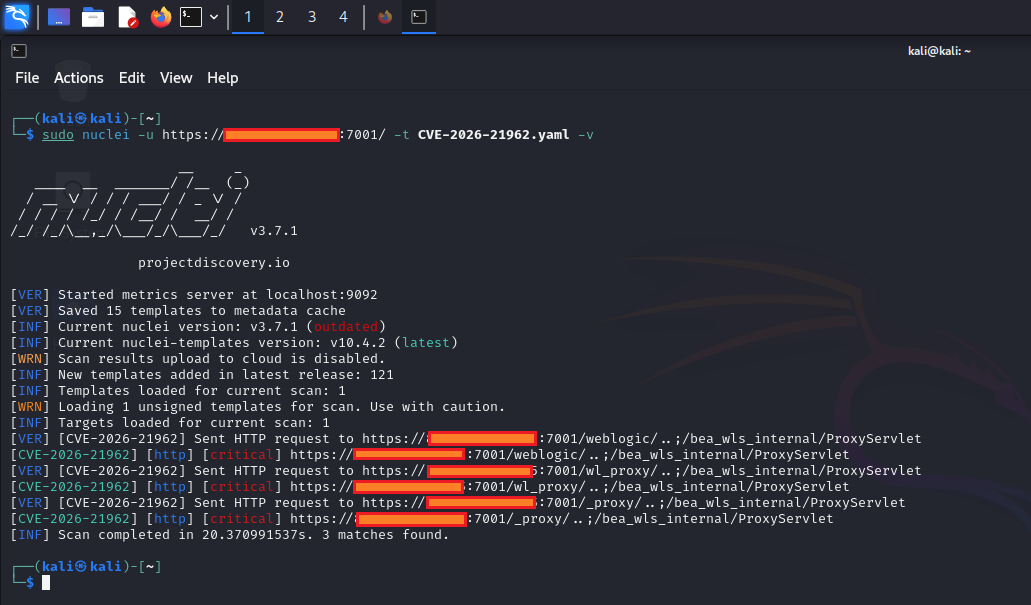
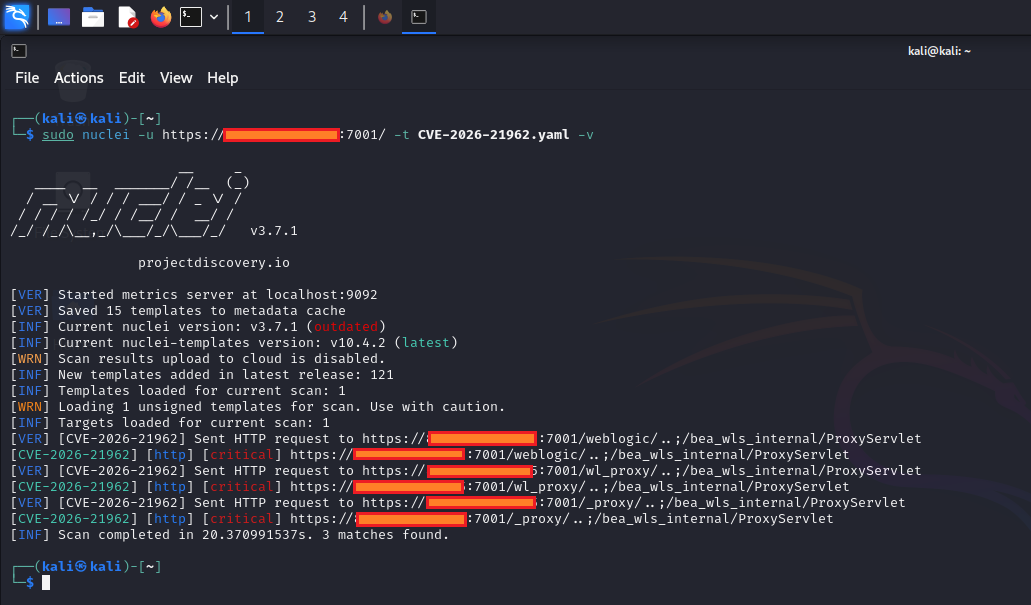
- Crafted HTTP requests bypass access control
+ Direct access to protected backend resources
⚡ No login required — attacker interacts directly with exposed services.
+ Full unauthorized access to application data
+ Data tampering or deletion
+ Backend system exposure through proxy chain
+ Potential lateral movement across services
| Attribute | Value |
|---|---|
| 🌍 Vector | Network |
| ⚙️ Complexity | Low |
| ❌ Privileges Required | None |
| 👤 User Interaction | None |
| 🔄 Scope | Changed |
Apache
IIS
+ Apply latest Oracle Critical Patch Update (Jan 2026)
# Reduce exposure
- Restrict proxy endpoints
- Limit external access
- Enforce network segmentation

# Detection & monitoring
- Enable HTTP request inspection
- Log and analyze anomalies
- Deploy WAF protections
+ Unexpected HTTP requests to proxy endpoints
+ Access without authentication tokens
+ Irregular request patterns or headers
+ Sudden spikes in backend responses
| Factor | Rating |
|---|---|
| 🔥 Severity | CRITICAL |
| ⚡ Exploitability | HIGH |
| 💥 Impact | MAXIMUM |
Entry Point   : HTTP Request
Attack Type   : Remote
Auth Needed   : No
Skill Level   : Low
🚨 Internet-exposed systems are at immediate risk. 🔓 Authentication can be completely bypassed. 🛠️ Patch immediately or isolate affected services.
[ Attacker ]
      │
      ▼
[ Crafted HTTP Request ]
      │
      ▼
[ Proxy Bypass ]
      │
      ▼
[ Backend Access ]
      │
      ▼
[ Data Compromise ]
- This vulnerability requires immediate attention
- Delayed patching significantly increases risk
+ Treat as actively exploitable in real-world scenarios

