📌 1. Executive Summary
CitrixBleed 2 refers to a critical memory disclosure vulnerability affecting:
- 🏢 Citrix NetScaler ADC
- 🌐 NetScaler Gateway
- 🔐 Internet-facing VPN appliances
It allows unauthenticated attackers to retrieve sensitive memory contents from affected devices via crafted network requests.
This class of issue is similar in nature to the original CitrixBleed (CVE-2023-4966).
🧠 2. Affected Vendor & Products
Affected systems include:
- Citrix NetScaler ADC
- Citrix NetScaler Gateway
- Appliances exposed to the public internet
These devices are typically deployed at the edge of enterprise networks.
🔎 3. Vulnerability Classification
| Field | Value |
|---|
| Vulnerability Type | Memory Over-read |
| Impact Type | Sensitive Data Exposure |
| Exploitability | Remote |
| Authentication | Not required |
| Privileges Required | None |
| User Interaction | None |
🔬 4. Root Cause (Technical Explanation)
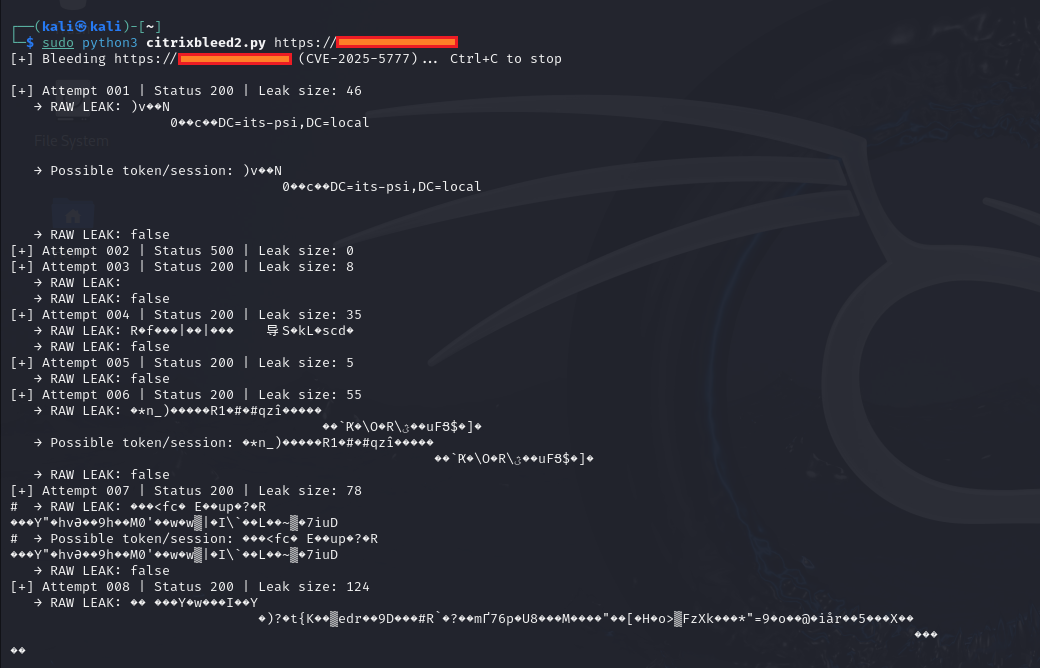
The vulnerability stems from:
- Improper memory bounds validation
- Inadequate input size checking
- Incorrect response buffer handling
When processing specially crafted HTTP requests, the appliance returns memory beyond intended boundaries.
This can expose:
- Session tokens
- Authentication cookies
- Internal memory buffers
- Fragments of other user sessions
This is conceptually similar to:
- Heartbleed (OpenSSL memory over-read)
- Other buffer over-read vulnerabilities
🚨 5. Real-World Impact
Because NetScaler devices:
- Sit at the network edge
- Protect VPN access
- Handle authentication and SSO
The consequences include:
- 🔑 Session hijacking
- 👤 Account impersonation
- 🛜 VPN bypass
- 🧭 Lateral movement
- 💣 Ransomware staging
- 🏢 Full enterprise compromise
📊 6. Severity Assessment
| Security Property | Impact |
|---|
| Confidentiality | 🔴 High |
| Integrity | 🟡 Indirect |
| Availability | 🟡 Indirect |
| Overall Risk | 🔥 Critical |
Edge device compromise dramatically increases blast radius.
🌍 7. Why Edge Device Vulnerabilities Are Dangerous
Edge appliances:
- Are internet-facing
- Have privileged network position
- Often bypass internal monitoring
- May not follow normal patch cycles
If compromised, attackers can pivot internally with legitimate-looking sessions.
🛠 8. Mitigation & Response Strategy
- Apply latest Citrix security patches
- Invalidate all active sessions
- Rotate administrative credentials
- Reset user passwords if exposure suspected
- Review logs for abnormal activity
Defensive Hardening
- Enforce Multi-Factor Authentication (MFA)
- Restrict management interfaces to internal IP ranges
- Enable detailed logging
- Monitor for session reuse anomalies
- Implement network segmentation
🔍 9. Detection Indicators
Security teams should monitor for:
- Unexpected VPN session reuse
- Abnormal geographic login patterns
- High-volume suspicious HTTP requests
- Internal access from new VPN sessions
- Post-authentication lateral movement
📅 10. Incident Response Considerations
If exploitation is suspected:
- Patch immediately
- Invalidate all sessions
- Rotate credentials
- Review authentication logs
- Hunt for persistence mechanisms
- Scan internal systems for lateral movement
Patching alone is not sufficient if tokens were leaked.
🧩 11. Comparison With Similar Vulnerabilities
| Vulnerability | Software | Type | Impact |
|---|
| Heartbleed | OpenSSL | Memory disclosure | Key & memory leakage |
| Shellshock | Bash | RCE | Full system execution |
| Log4Shell | Log4j | RCE | Remote code execution |
| CitrixBleed | NetScaler | Memory disclosure | Session hijacking |
CitrixBleed-class vulnerabilities are particularly dangerous due to device placement.
⚖️ 12. Ethical & Legal Notice
This information is for:
- Educational purposes
- Defensive awareness
- Authorized security research
Do NOT exploit systems without explicit written permission.
Unauthorized exploitation is illegal.
🧠 13. Key Security Lessons
- Memory safety remains a major risk class
- Edge devices require rapid patching
- Session invalidation is critical after memory leaks
- VPN appliances are high-value targets
- Monitoring should include authentication anomalies
🔐 Final Takeaway
When the gateway leaks memory,
the entire enterprise is at risk.
 0xblackash/cve-2025-5777