
cameradar v6.2.1
Cameradar hacks its way into RTSP videosurveillance cameras
Cameradar






RTSP stream access tool
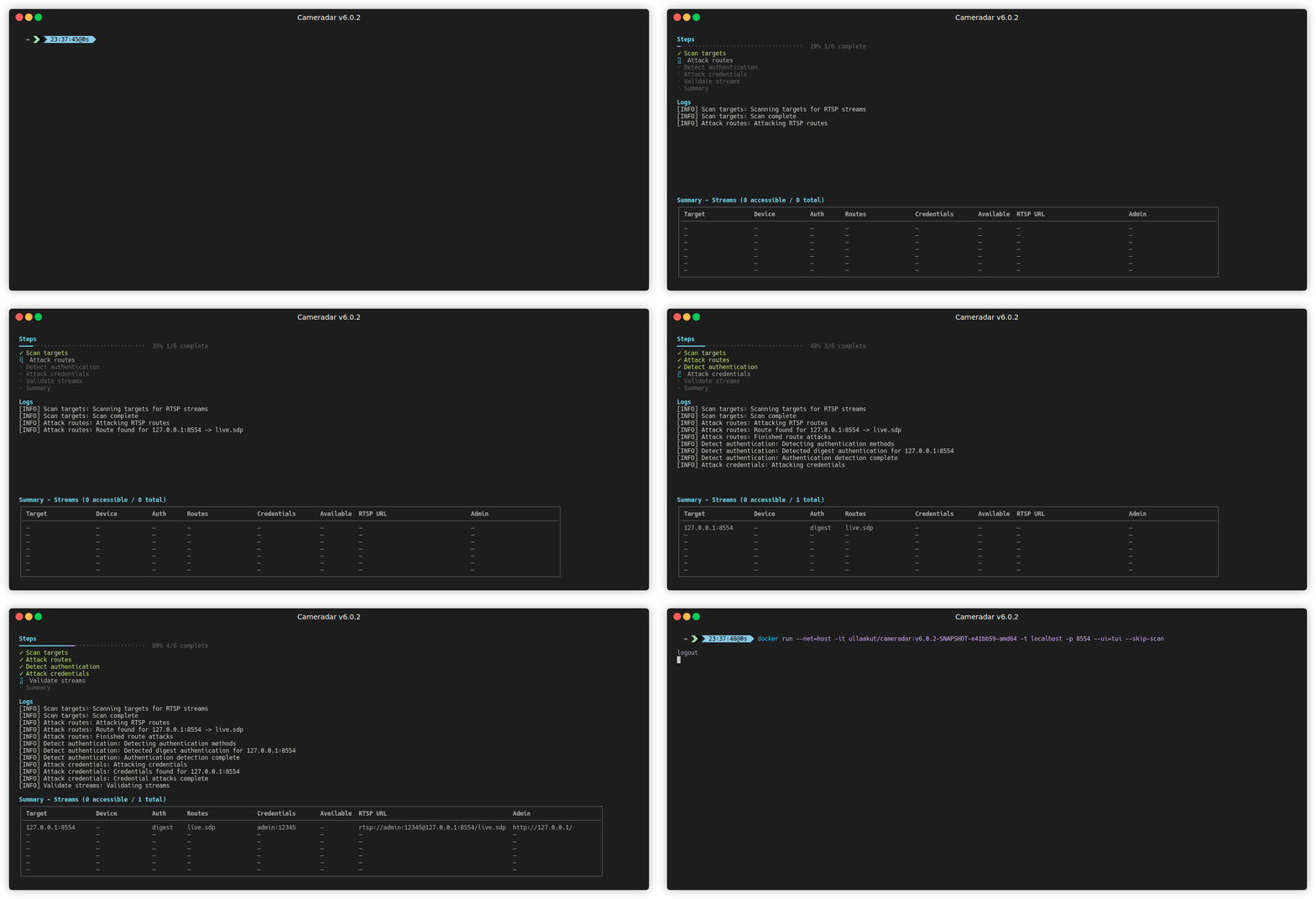
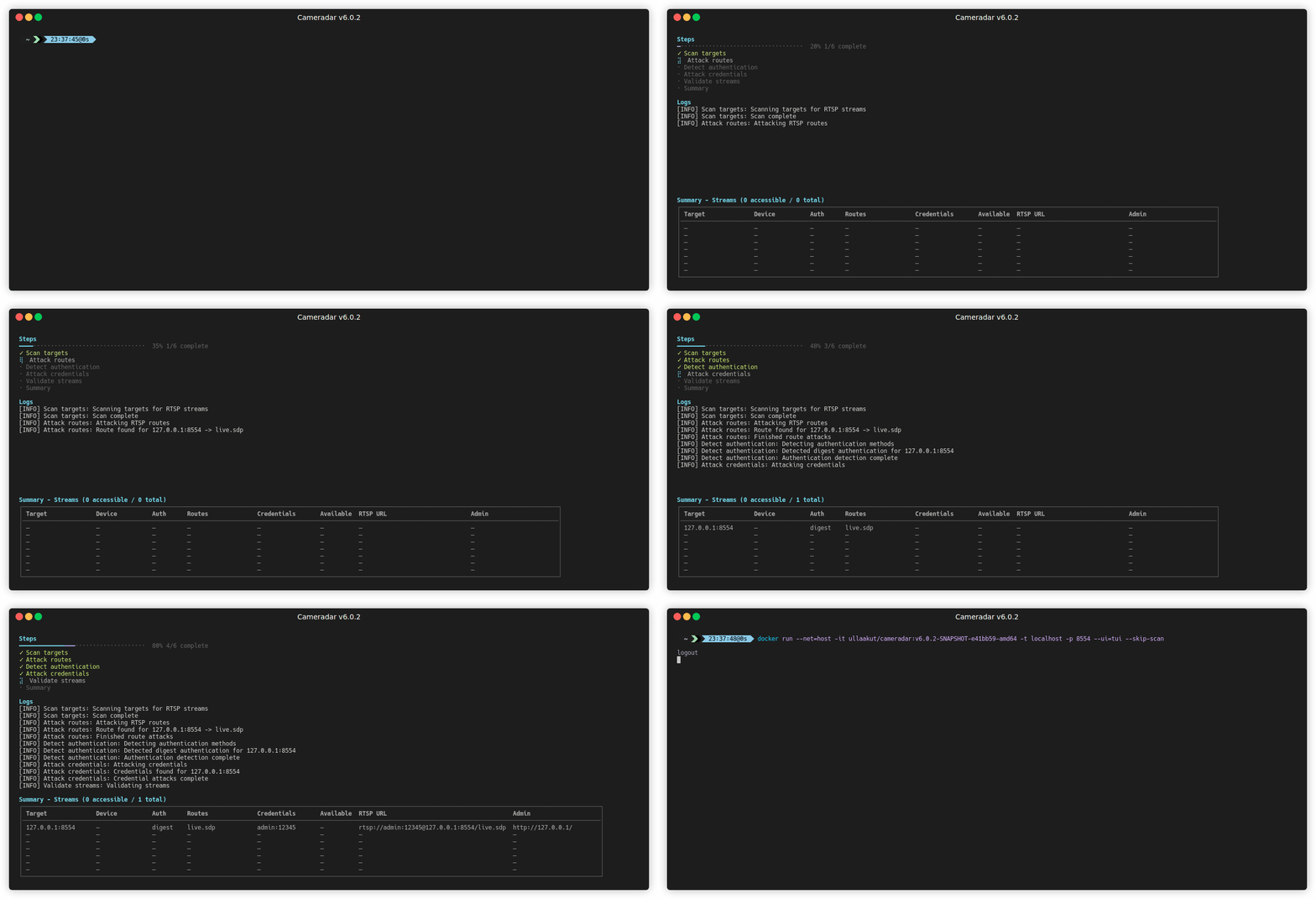
Cameradar scans RTSP endpoints on authorized targets, and uses dictionary attacks to bruteforce their credentials and routes.
What Cameradar does
- Detects open RTSP hosts on accessible targets.
- Detects the device model that streams the RTSP feed.
- Attempts dictionary-based discovery of stream routes (for example,
/live.sdp). - Attempts dictionary-based discovery of camera credentials.
- Produces a report of findings.
Table of contents
- Quick start with Docker
- Install the binary
- Install on Android (Termux)
- Configuration
- Security and responsible use
- Output
- Check camera access
- Command-line options and environment variables
- Input file format
- Build and contribute
- Frequently asked questions
- Examples
- License
Quick start with Docker
Install Docker and run:
docker run --rm -t --net=host ullaakut/cameradar --targets <target>
Example:
docker run --rm -t --net=host ullaakut/cameradar --targets 192.168.100.0/24
This scans ports 554, 5554, and 8554 on the target subnet. It attempts to enumerate RTSP streams. For all options, see Configuration reference.
-
Targets can be CIDRs, IPs, IP ranges or a hostname.
- Subnet:
172.16.100.0/24 - IP:
172.16.100.10 - Host:
localhost - Range:
172.16.100.10-20
- Subnet:
-
To use custom dictionaries, mount them and pass both flags:
docker run --rm -t --net=host \
    -v /path/to/dictionaries:/tmp/dictionaries \
    ullaakut/cameradar \
    --custom-routes /tmp/dictionaries/my_routes \
    --custom-credentials /tmp/dictionaries/my_credentials.json \
    --targets 192.168.100.0/24
Install the binary
Use this option if Docker is not available or if you want a local build.
Dependencies
- Go 1.25 or later
Steps
go install github.com/Ullaakut/cameradar/v6/cmd/cameradar@latest
The cameradar binary is now in your $GOPATH/bin.
For available flags, see Configuration reference.
Install on Android (Termux)
These steps summarize a working Termux setup for Android. Use Termux 117 from F-Droid or the official Termux site, not Google Play.
1) Set up Termux and Alpine
Install the required packages in Termux:
pkg update
pkg install mc wget git nmap proot-distro
Install Alpine and log in:
proot-distro install alpine
proot-distro login alpine
2) Install build tools in Alpine
apk add wget git go gcc clang musl-dev make
3) Build Cameradar
Create a module path and clone the repo:
mkdir -p go/pkg/mod/github.com/Ullaakut
cd go/pkg/mod/github.com/Ullaakut
git clone https://github.com/Ullaakut/cameradar.git
cd cameradar/cmd/cameradar
go install
4) Run Cameradar
Copy dictionaries and run the binary:
mkdir -p /tmp
cp -r ../../dictionaries /tmp/dictionaries
/go/bin/cameradar --targets=<target> --custom-credentials=/tmp/dictionaries/credentials.json --custom-routes=/tmp/dictionaries/routes --ui=plain --debug
Replace <target> with an IP, range, host or subnet you are authorized to test.
Configuration
The default ports are 554, 5554, 8554, http, 322, and 8322.
If you do not specify ports, Cameradar uses those.
Example of scanning custom ports:
docker run --rm -t --net=host \
    ullaakut/cameradar \
    --ports "18554,19000-19010" \
    --targets localhost
You can replace the default dictionaries with your own routes and credentials files.
The repository provides baseline dictionaries in the dictionaries folder.
docker run --rm -t --net=host \
    -v /my/folder/with/dictionaries:/tmp/dictionaries \
    ullaakut/cameradar \
    --custom-routes /tmp/dictionaries/my_routes \
    --custom-credentials /tmp/dictionaries/my_credentials.json \
    --targets 172.19.124.0/24
RTSPS and TLS certificates
Use rtsps:// URLs to access RTSPS streams.
- If the stream certificate is issued by a trusted public CA, no extra setup is needed.
- If the stream certificate is self-signed or issued by a private CA, the OS trust store may reject it.
- In that case, point
SSL_CERT_FILEto the CA certificate (or server cert for a self-signed setup) when running Cameradar.
Example with local binary:
SSL_CERT_FILE=/path/to/ca-or-server.crt \
        cameradar \
        --targets localhost \
        --ports 8322 \
        --skip-scan \
        --custom-routes routes.txt \
        --custom-credentials credentials.json
Example with Docker:
docker run --rm -t --net=host \
        -e SSL_CERT_FILE=/tmp/certs/server.crt \
        -v /path/to/certs:/tmp/certs:ro \
        ullaakut/cameradar \
        --targets localhost \
        --ports 8322
If you prefer not to use SSL_CERT_FILE, add your CA certificate to the system trust
store used by your runtime environment.
Skip discovery with --skip-scan
If you already know the RTSP endpoints, you can skip discovery and treat each target and port as a stream candidate. This mode does not run discovery and can be useful on restricted networks or when you want to attack a known inventory.
Skipping discovery means:
- Cameradar does not run discovery and does not detect device models.
- Targets resolve to IP addresses. Hostnames resolve via DNS.
- CIDR blocks and IPv4 ranges expand to every address in the range.
- Large ranges create many targets, so use them carefully.
Example:
docker run --rm -t --net=host \
    ullaakut/cameradar \
    --skip-scan \
    --ports "554,8554" \
    --targets 192.168.1.10
In this example, Cameradar attempts dictionary attacks against
ports 554 and 8554 of 192.168.1.10.
Choose the discovery scanner with --scanner
Cameradar supports two discovery backends:
nmap(default)masscan