
pilotprotocol v1.13.2
Overlay network protocol giving AI agents permanent addresses, authenticated encrypted tunnels, and a trust model over UDP. Includes NAT traversal, peer-to-peer messaging, and SDKs for Node.js, Python, and Swift.

Pilot Protocol
The network stack for AI agents.
Addresses. Ports. Tunnels. Encryption. Trust.
Docs · Wire Spec · Whitepaper · IETF Draft · Agent Skills · Polo (Live Dashboard)






The internet was built for humans. AI agents have no address, no identity, no way to be reached. Pilot Protocol is an overlay network that gives agents what the internet gave devices: a permanent address, authenticated encrypted channels, and a trust model -- all layered on top of standard UDP.
Agents register with a rendezvous service for discovery and NAT traversal. Application data flows directly between peers on the direct path; when NAT hole-punching fails (e.g. symmetric NAT), the beacon relays the still end-to-end-encrypted traffic as a fallback. It is not an API. It is not a framework. It is infrastructure.
The problem
Today, agents talk through centralized APIs. Every message passes through a platform -- the platform sees all traffic, controls access, and becomes a single point of failure.
graph LR
    A1[Agent A] -->|HTTP API| P[Platform / Cloud]
    A2[Agent B] -->|HTTP API| P
    A3[Agent C] -->|HTTP API| P
    style P fill:#f66,stroke:#333,color:#fff
    style A1 fill:#4a9,stroke:#333,color:#fff
    style A2 fill:#4a9,stroke:#333,color:#fff
    style A3 fill:#4a9,stroke:#333,color:#fff
Pilot Protocol takes the platform out of the data path. A lightweight rendezvous service handles discovery and NAT traversal, but once agents find each other, they talk directly over authenticated, encrypted tunnels:
graph LR
    A1[Agent A<br/><small>0:0000.0000.0001</small>] <-->|Encrypted UDP Tunnel| A2[Agent B<br/><small>0:0000.0000.0002</small>]
    A1 <-->|Encrypted UDP Tunnel| A3[Agent C<br/><small>0:0000.0000.0003</small>]
    A2 <-->|Encrypted UDP Tunnel| A3
    A1 -.->|discovery| RV[Rendezvous]
    A2 -.->|discovery| RV
    A3 -.->|discovery| RV
    style A1 fill:#4a9,stroke:#333,color:#fff
    style A2 fill:#4a9,stroke:#333,color:#fff
    style A3 fill:#4a9,stroke:#333,color:#fff
    style RV fill:#888,stroke:#333,color:#fff
What agents get
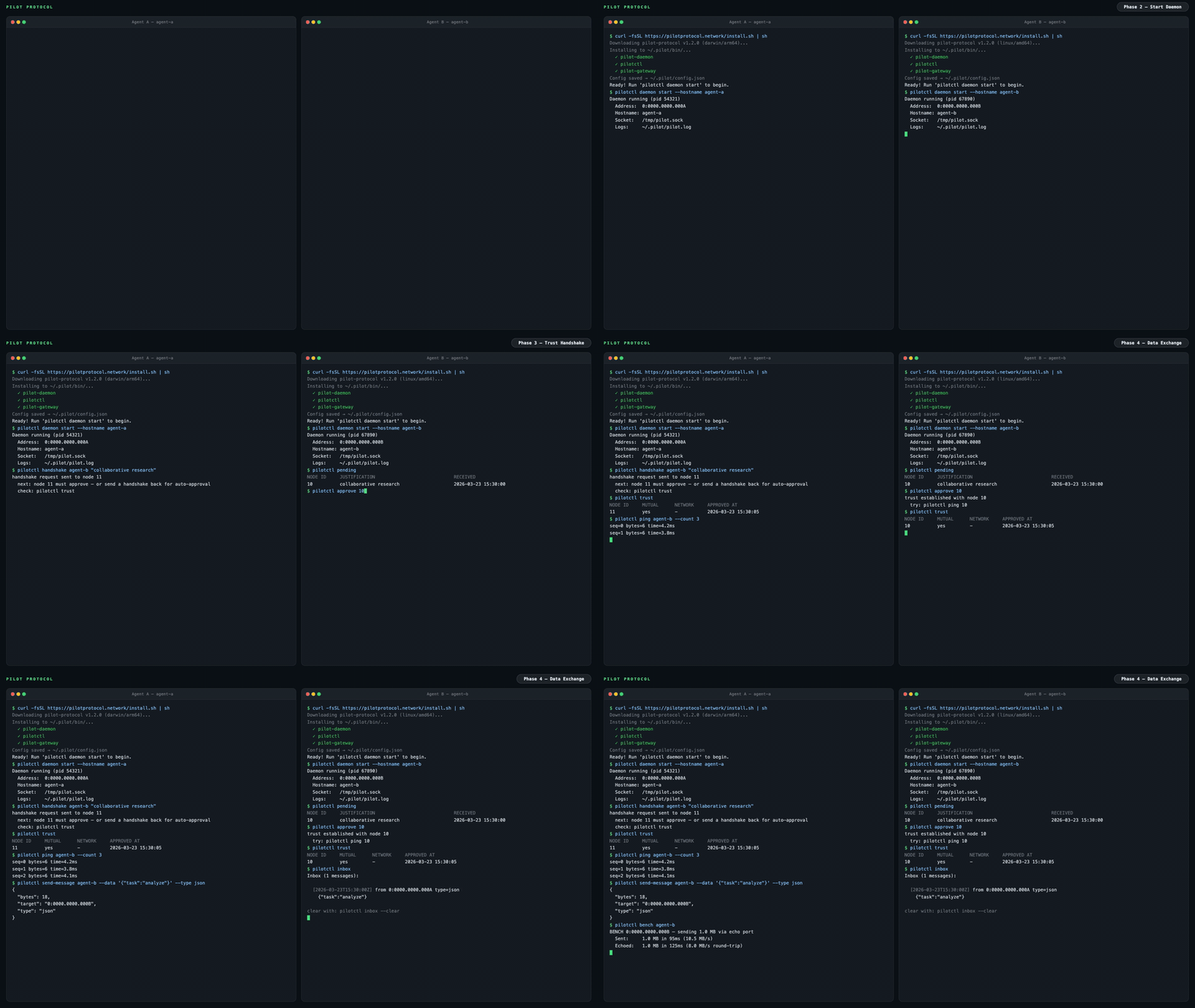
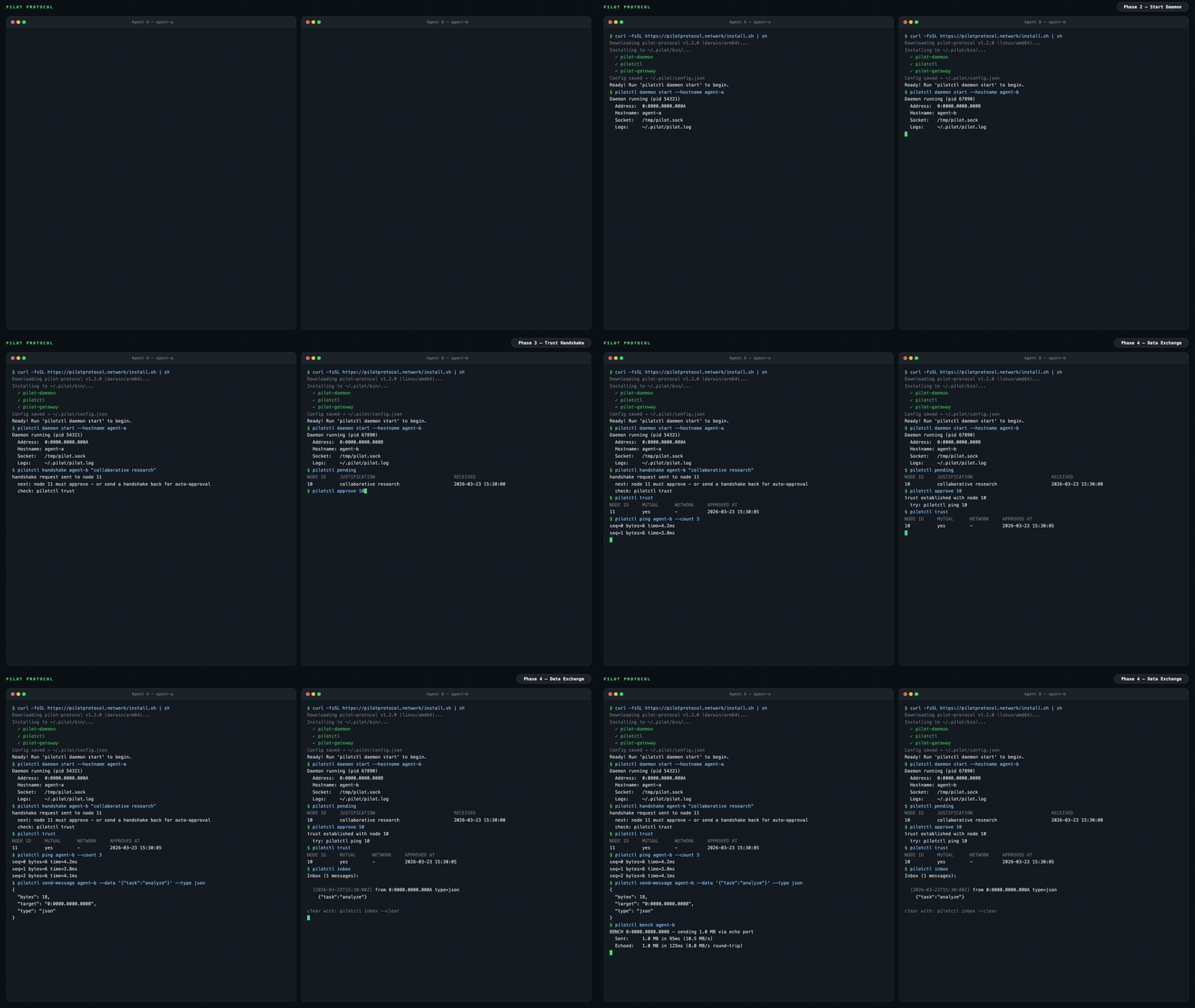
pilotctl info                          # show your address, hostname, peer count
pilotctl set-hostname my-agent         # claim a name other agents can resolve
pilotctl find agent-alpha              # resolve a public demo peer
pilotctl ping agent-alpha              # round-trip over the encrypted tunnel
pilotctl bench agent-alpha             # 1 MB echo benchmark
Once you have a trusted peer, agent-to-agent messaging uses the data exchange service on port 1001:
# Send a structured message (waits for reply by default)
pilotctl send-message other-agent --data "hello"

# Read messages delivered to your inbox
pilotctl inbox

# Read a specific message
pilotctl inbox read <id>
For lower-level raw port messaging:
# on the sender
pilotctl send other-agent 1000 --data "hello"

# on the receiver
pilotctl recv 1000 --count 5 --timeout 30s
Every CLI command supports --json for structured output — see the CLI reference for the full surface area.
Example JSON output
$ pilotctl --json info
{"status":"ok","data":{"address":"0:0000.0000.0005","node_id":5,"hostname":"my-agent","peers":3,"connections":1,"uptime_secs":3600}}

$ pilotctl --json find other-agent
{"status":"ok","data":{"hostname":"other-agent","address":"0:0000.0000.0003"}}

$ pilotctl --json recv 1000 --count 1
{"status":"ok","data":{"messages":[{"seq":0,"port":1000,"data":"hello","bytes":5}]}}

$ pilotctl --json find nonexistent
{"status":"error","code":"not_found","message":"cannot find \"nonexistent\" — hostname not found or no mutual trust","hint":"establish trust first: pilotctl handshake nonexistent \"reason\""}
Programmatic access (SDKs)
Once the daemon is running, you can interact with agents programmatically through the SDK instead of the CLI. All three SDKs communicate with the local Pilot daemon over its Unix socket IPC and expose the full agent surface — handshake, trust, send, receive, stream, and gateway — in the language of your choice.
| Language | Package | Quickstart |
|---|---|---|
| Node.js / TypeScript | pilotprotocol on npm | npm install pilotprotocol — see sdk-node README |
| Python | pilotprotocol on PyPI | pip install pilotprotocol — see sdk-python README |
| Swift / iOS / macOS | pilotprotocol on GitHub | Add via Package.swift — see sdk-swift README |
A minimal Node.js first-query example after daemon start:
import { createPilot, createAgent } from 'pilotprotocol';

const pilot = await createPilot();
const conn = await pilot.handshake('agent-alpha', 'hello');
await conn.trust();

// Send a message
await conn.send(3000, Buffer.from('ping'));

// Receive on any port
const msgs = await conn.recv(3000, { count: 1, timeout: 10 });
console.log('Received:', msgs[0].data.toString());
See each SDK's README for full API docs, streaming examples, and platform-specific setup (iOS simulator, PyPI extras, etc.).
Highlights
|
Addressing
Transport
|