
CVE-2026-39875-macOS-CUPS-LPE — Updated!
Unprivileged user to root on macOS Sonoma, Sequoia, and Tahoe. Patched in macOS 26.6 / 15.7.8 / 14.8.8.
CVE-2026-39875-macOS-CUPS-LPE
Unprivileged user to root via CUPS vulnerability affecting macOS Tahoe, Sequoia, and Sonoma prior to macOS 26.6 / 15.7.8 / 14.8.8.
Proof of Concept Demonstrations
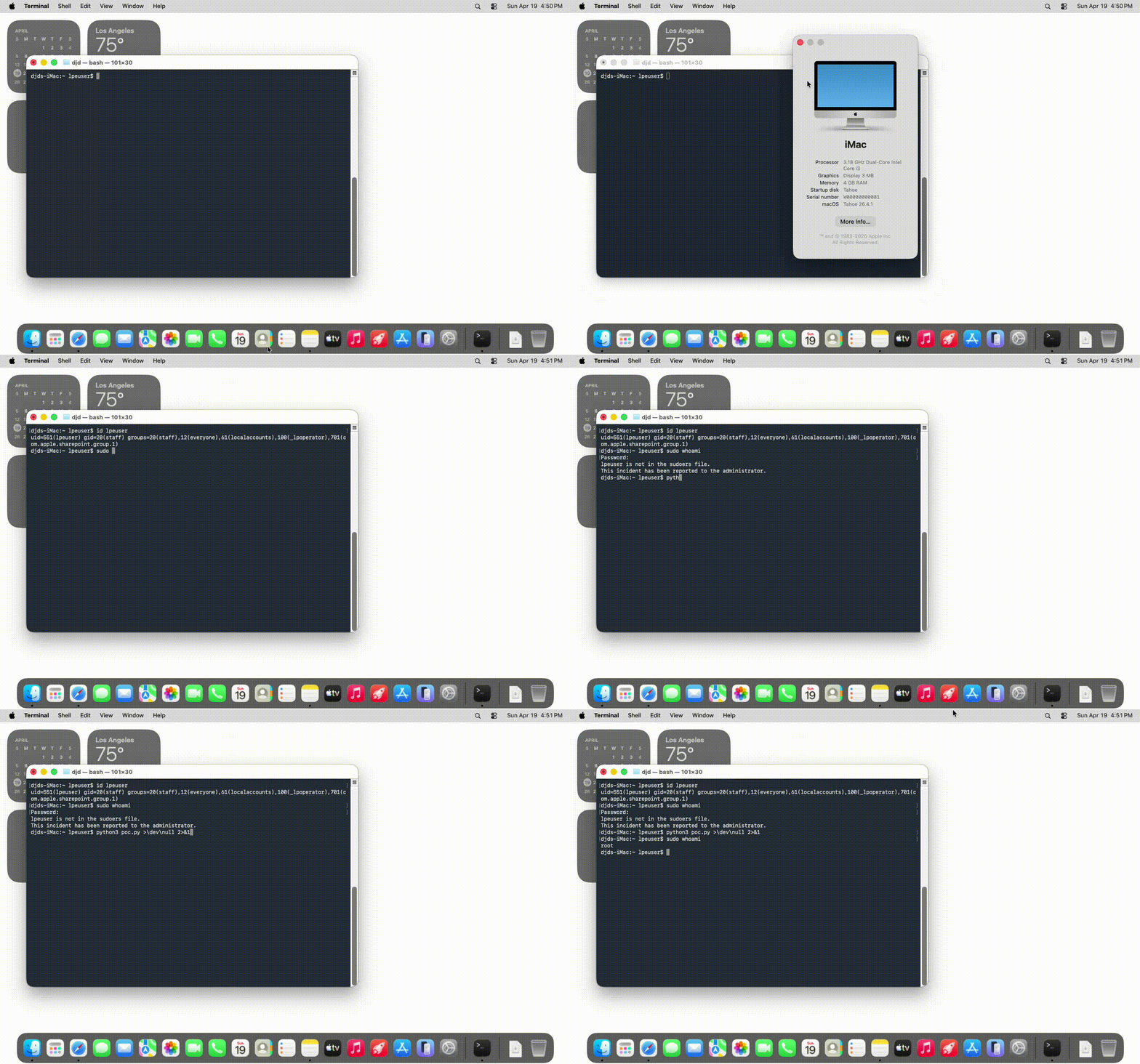
macOS Tahoe 26.4.1
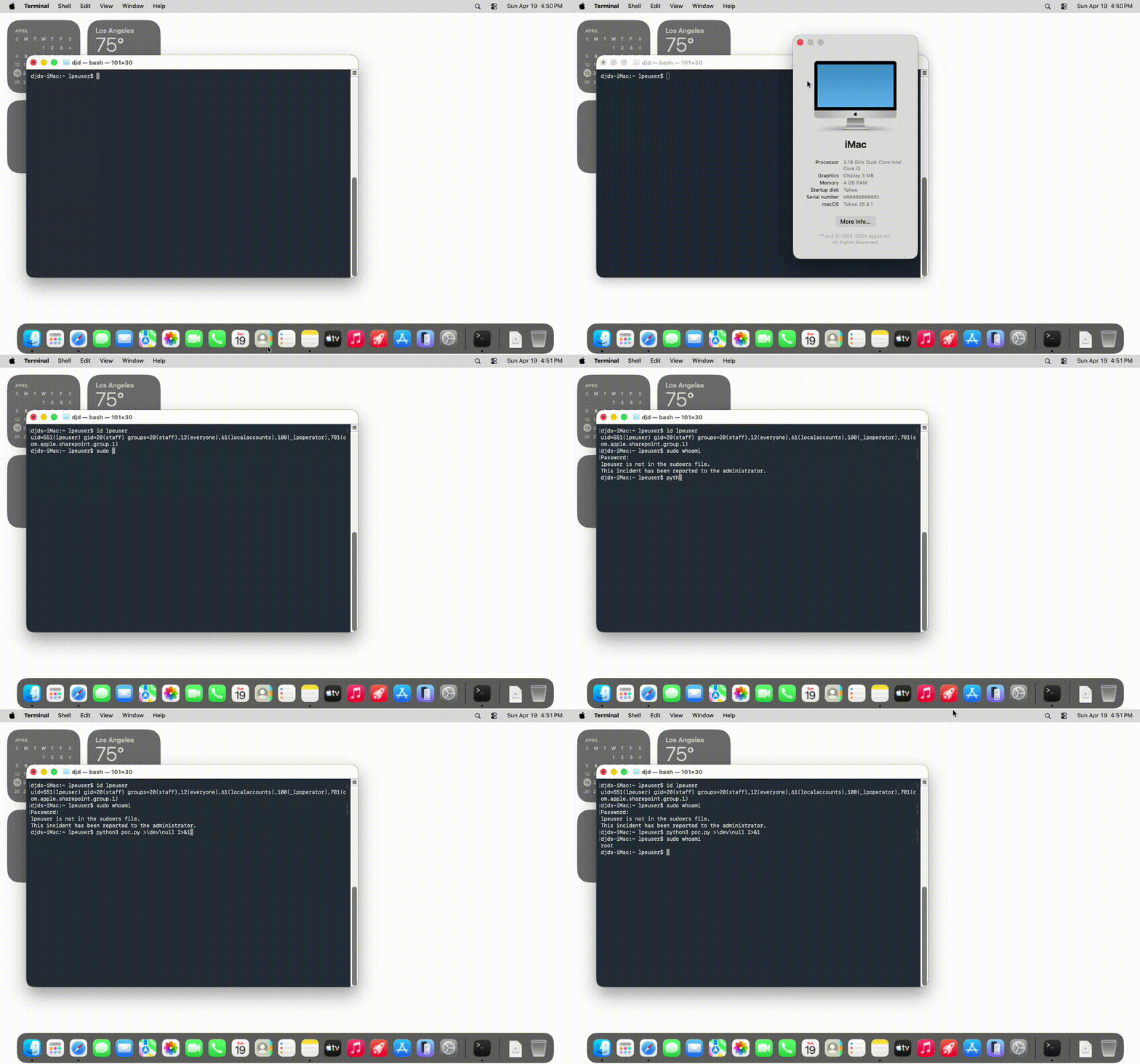
macOS Sequoia 15.7.5
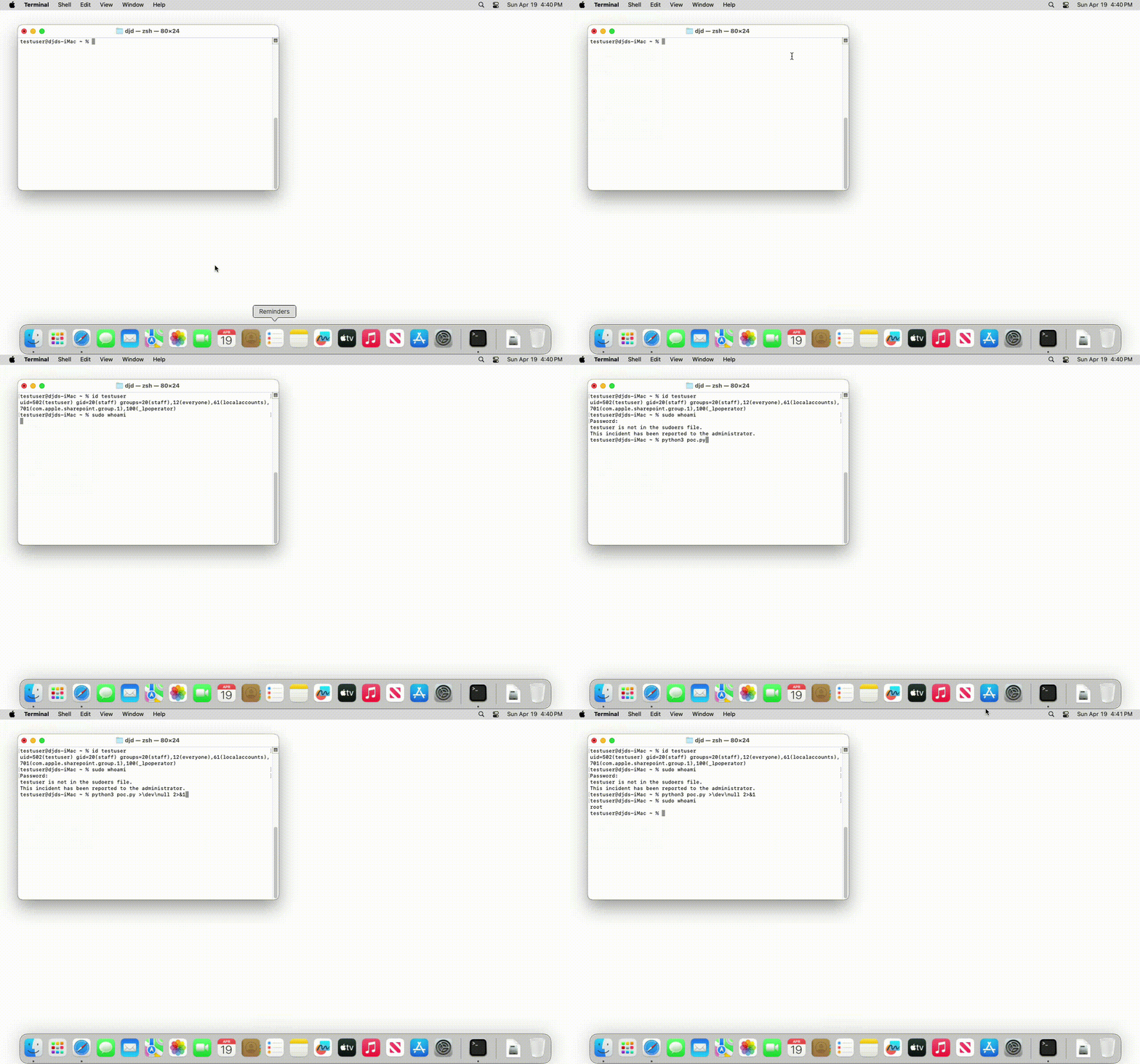
macOS Sonoma 14.8.5
Root Cause
The vulnerability arises from two chained logic flaws in the privileged cupsd
daemon.
1. Privileged authentication token forwarded across a trust boundary.
When CUPS probes a newly registered printer, it forwards a valid Local
authentication token to the printer's backend — the endpoint specified by the
printer's device-uri. Because an unprivileged user controls that device-uri,
they can register a printer pointing at a listener they control and receive a
token that was never intended to leave the trusted subsystem boundary. The
design assumes the backend is trusted; allowing unprivileged users to register
printers breaks that assumption.
2. Root-privileged file I/O reachable before authentication validation completes.
Within a reliably reproducible timing window during printer registration, cupsd
performs a file write with root privileges before authentication validation has
completed. The privileged I/O is not gated on the auth check resolving, and
both the destination path and file contents are attacker-influenced at the point
the write occurs.
Demonstration
python3 poc.py
The proof of concept chains the two flaws in three stages.
Stage 1 — Token capture.
The attacker registers a printer whose device-uri points at a local listener
they control, then triggers a probe. cupsd forwards a valid Local
authentication token to the attacker-controlled listener.
Stage 2 — Token replay.
The attacker replays the captured token to register a second printer with a
file:// device-uri targeting an arbitrary, non-SIP-protected path of their
choosing.
Stage 3 — Arbitrary write as root.
The attacker submits a print job with attacker-controlled content to the second
printer. cupsd writes the job data to the specified path as root. No user
interaction is required at any stage
Afterwards, the script will verify the file was created as root, thus demonstrating the vulnerability.
Note: This proof-of-concept demonstrates arbitrary file write as root only. It does not escalate privileges.
Credits
Independently discovered by Dallas Dubs; also credited by Apple are Aaron Grattafiori - NVIDIA AI Red Team, XBreach.ai, Andreas Jaegersberger & Ro Achterberg of Nosebeard Labs