
Seal v0.2.3
Peer-to-peer, end-to-end encrypted chat. No inbox. No account to recover. Nobody's listening — not even us.
Seal
Peer-to-peer, end-to-end encrypted chat.
No inbox. No account to recover. Nobody's listening — not even us.







Messages travel directly between peers over libp2p and are encrypted with the Signal-style Olm/Megolm protocols (via vodozemac) before they ever leave your device. The only server involved is a small directory that helps peers find each other's current address. It never sees message content, and it's purgeable in one command.
See docs/THREAT_MODEL.md and
docs/SECURITY.md for what's actually protected against
and how.
Contents
- Screenshots
- Features
- How it works
- Project layout
- 1. Prerequisites
- 2. Building
- 3. Running it in dev mode
- 4. Testing
- 5. Backend (directory server) setup
- 6. Using the app
Screenshots
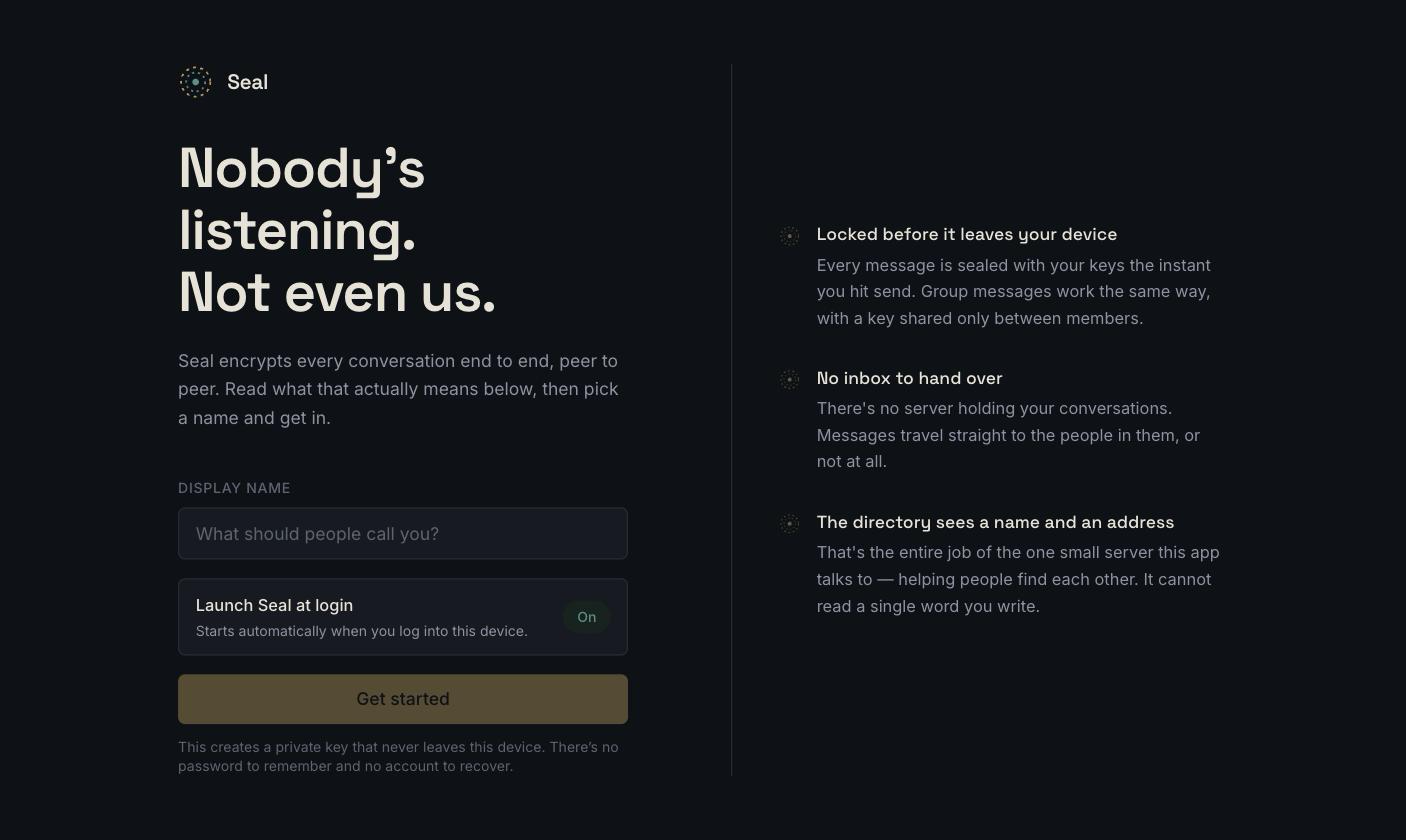
First run — pick a name; nothing else to set up.
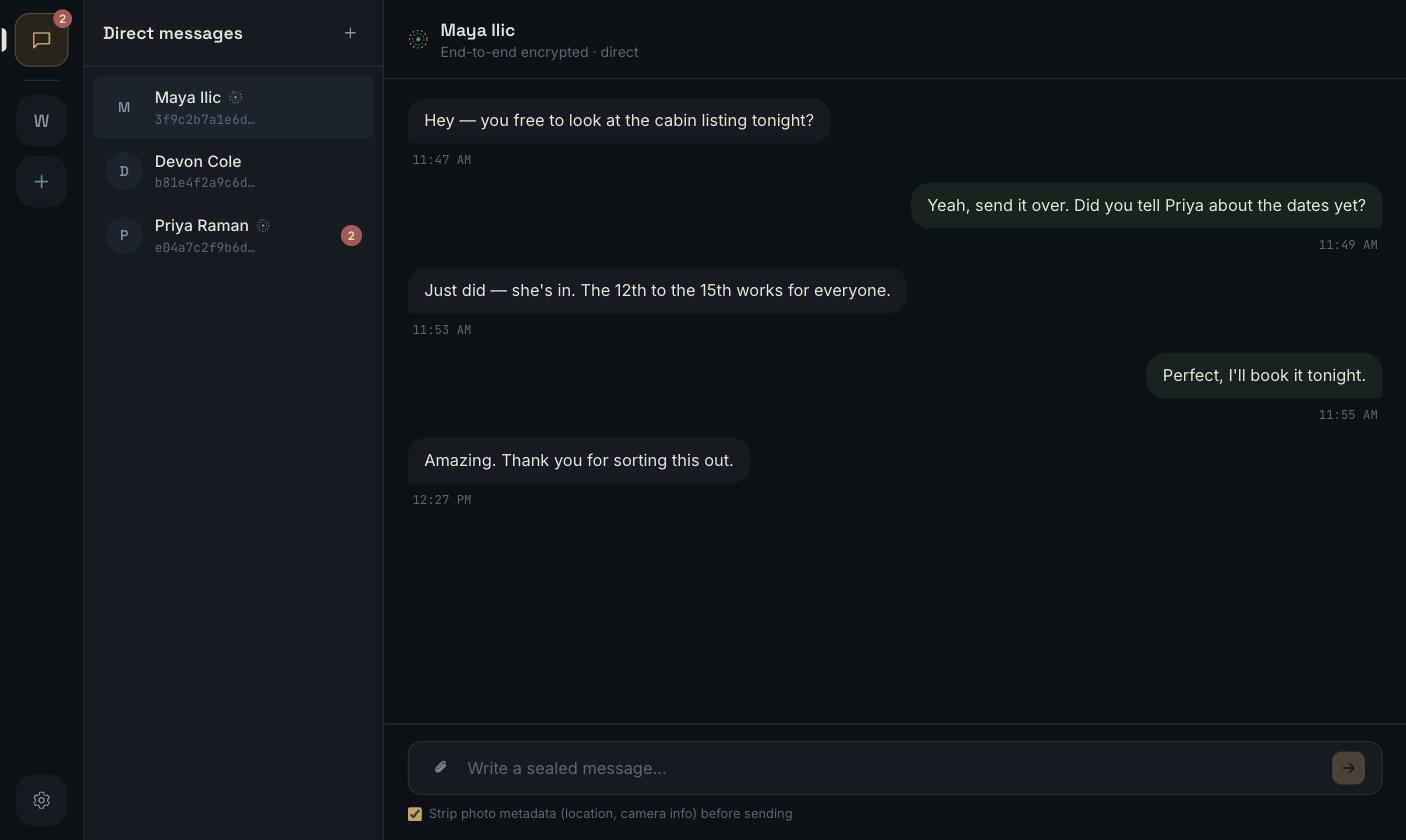
Conversations — the group rail, contact list, and an end-to-end encrypted chat pane.
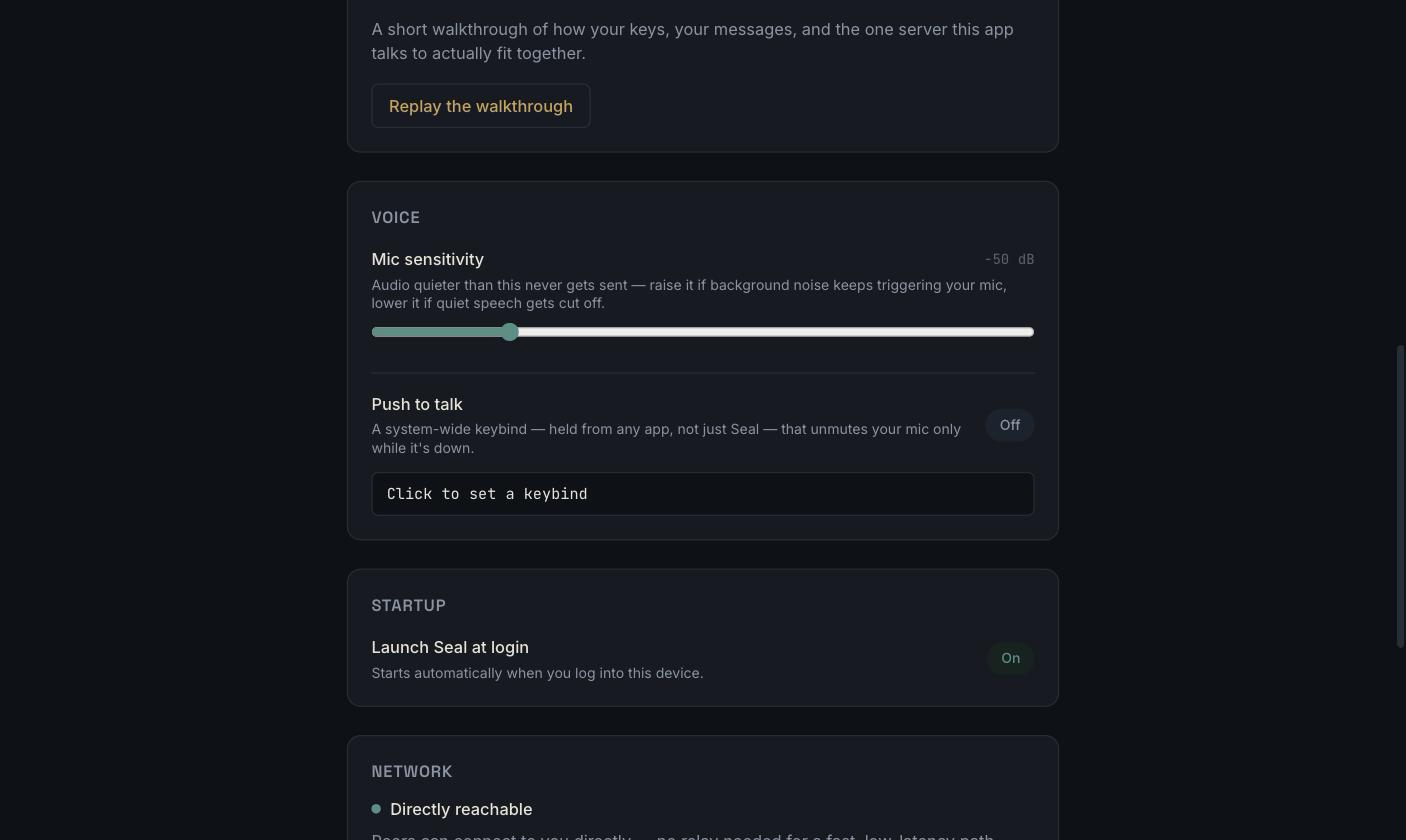
Settings — mic sensitivity, push-to-talk, launch-at-login, network reachability.
Features
- End-to-end encrypted, always — every message is sealed with Olm (1:1) or Megolm (groups) before it ever leaves your device, using vodozemac's Double-Ratchet-style scheme: every message gets its own key.
- No inbox, ever — messages travel over a direct peer-to-peer connection (libp2p: QUIC/TCP + Noise, with relay and hole-punching for NATs). If the recipient is offline, the message waits locally and retries — it's never queued on anyone else's infrastructure.
- A directory, not a database — the one server involved
(
crates/directory-server) maps a user ID to a current network address and nothing else. It's structurally incapable of reading message content: itsCargo.tomldoesn't even depend on the crates that know how. - Multiple accounts, one device — fully separate identities (keys, contacts, messages) that you can switch between without restarting.
- Groups with real membership changes — text and voice channels per group; removing someone rotates the group's key so they can't read anything sent afterward.
- Voice, built in — push-to-talk on a system-wide shortcut (works from any app, not just Seal), adjustable mic sensitivity, and an optional voice changer.
- Attachments without the metadata — EXIF data (GPS location, camera/device info) is stripped from images before they're sent, on by default.
- A real panic button — Settings → Data & Privacy instantly and irreversibly deletes every key, contact, and message on this device, with zero effect on anyone you've talked to.
- Launch at login, if you want it — on by default, a toggle away in Settings.
- One codebase, three platforms — native windows on macOS, Windows, and Linux, via Tauri.
How it works
There are two kinds of identity in this app, and they're deliberately kept separate:
- Your chat identity is an Ed25519/Curve25519 keypair generated locally
by vodozemac the first time you
open the app (
identity::Identity). Your public "user ID" is just the fingerprint of that key (wire_proto::user_id_from_ed25519). It can't be issued or revoked by any server, because no server is involved in creating it. - Your network identity is a separate libp2p keypair (
PeerId), used only for the transport layer. It can change across restarts without affecting your chat identity at all; the two are bound together only by a presence record you sign yourself.
Finding someone and actually talking to them are two different steps: